
From Rickshaws to Riverboats: celebrating the 10th edition of my Photography Tour in Bangladesh
For the 10th edition of my photography tour in Bangladesh, I brought together a mix of returning and new participants to explore one of my all-time favourite destinations to photograph. Over nearly two weeks, I shared locations I’ve been returning to for years — places shaped by work, light, and everyday life.
It turned into one of those tours where everything clicks: strong shooting conditions, a great group dynamic, plenty of laughs, and an impressive amount of excellent food along the way. From misty mornings and chaotic markets to quiet rivers and long walks through villages, this is a look at what we experienced on this edition of the tour.
Day 1 — Arrival Day & Street Photography Warm-Up in Dhaka
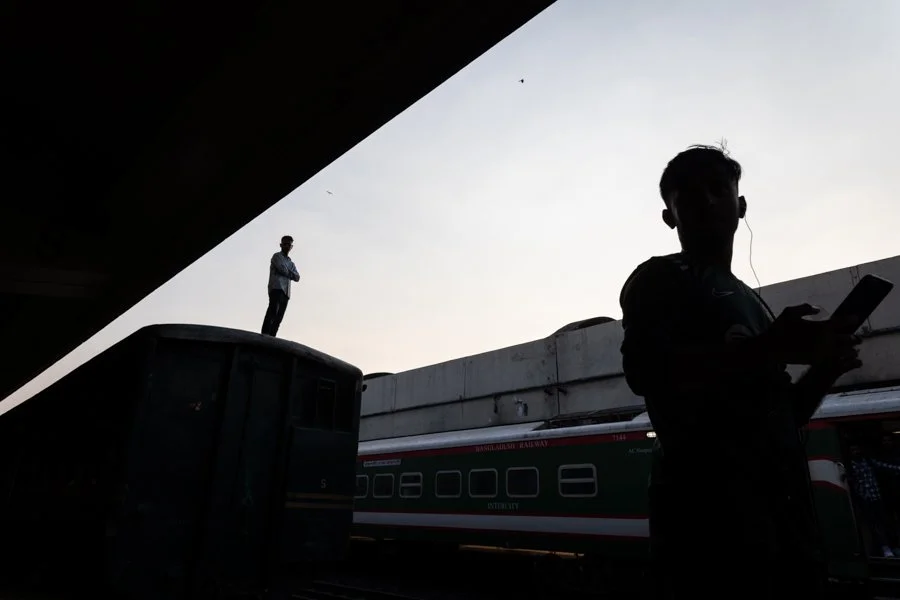
This day was mainly about welcoming everyone and organising airport pick-ups, but since most participants were already in Dhaka, what else could we possibly do than go out and take photos? We jumped straight into the chaos and took local transportation — the always fun rickshaws — heading to the local train station as a gentle warm-up for this photography tour in Bangladesh.
And then it was time for a tradition that has been going on since I started running photography tours in Bangladesh about ten years ago: dinner. More precisely, grilled chicken, naan, and the legendary magic sauce. This time, I finally managed to get a glimpse of the recipe, and I may (or may not) attempt to recreate it at home. Anyway, maybe I should start talking about this 2025 Bangladesh photo workshop properly. (I might mention food again once or twice. No promises.)
Day 2 — Sunrise Chaos, River Life & Street Photography in Old Dhaka
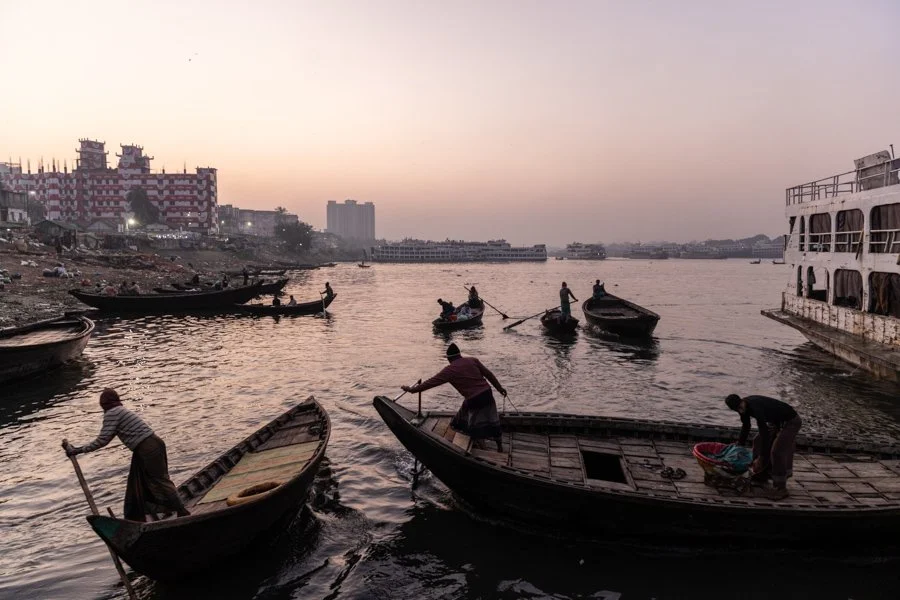
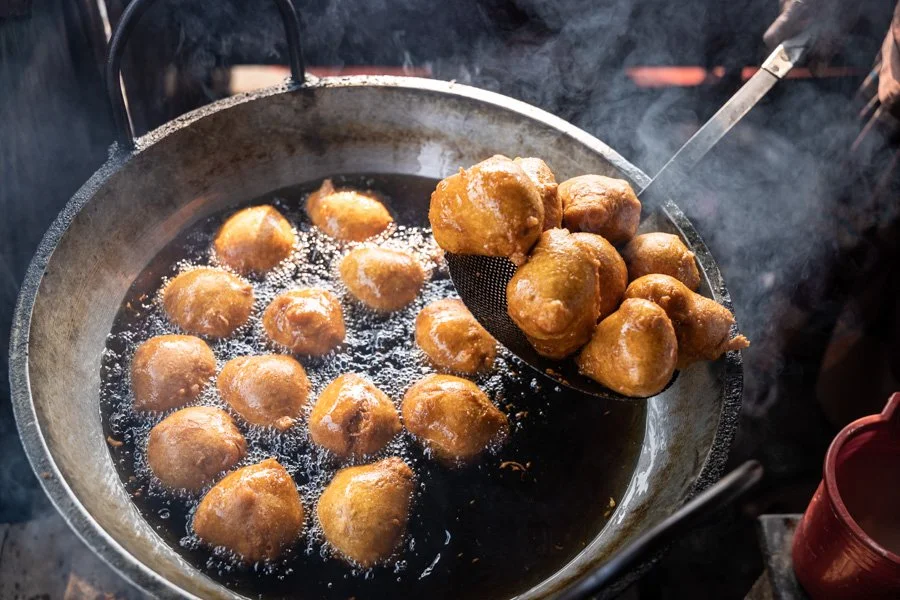
After our first welcome day and dinner, we kicked things off seriously with a sunrise shoot in Shadarghat. We made our way to one of my favourite spots, offering a perfect view of the river with boats layered in the foreground and the sun rising behind them. We also photographed food vendors and street sellers in the surrounding alleys, as the local market slowly came to life.
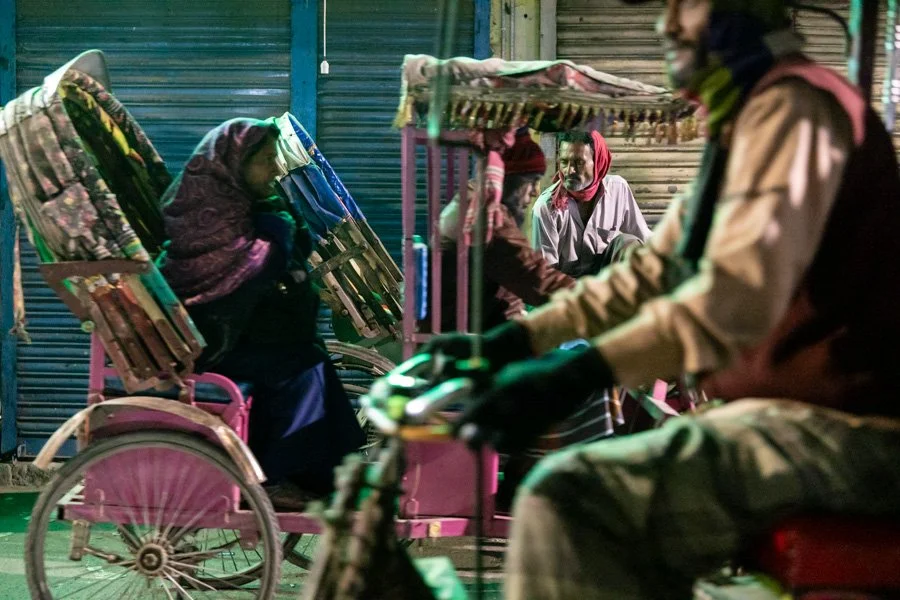
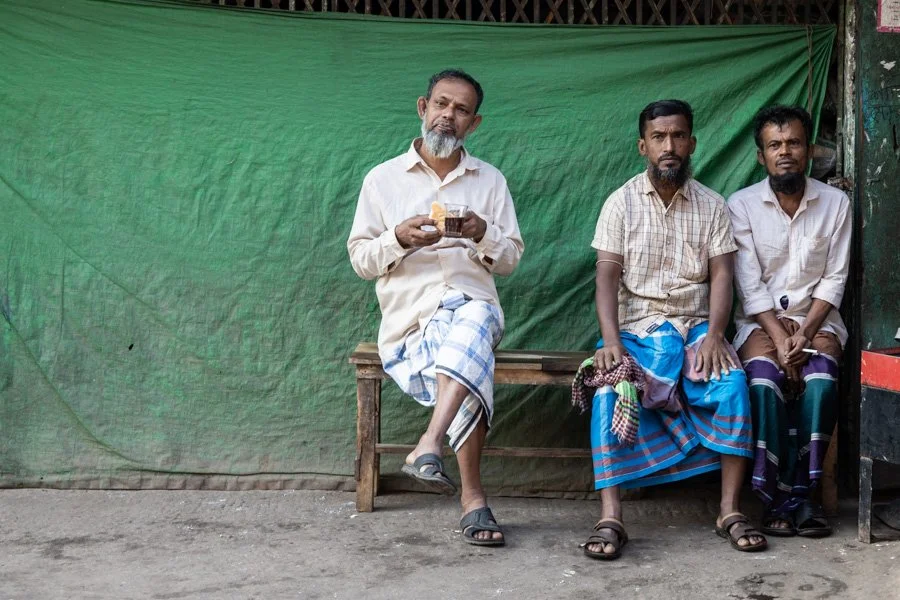
After a while, we crossed the river and entered narrow, colourful streets where the city wakes up gently and people head out for their first drink of the day. These streets are very close to my heart, as I’ve spent countless hours exploring them over the years. We stopped for a local breakfast in one of my regular spots, discovered new drinks I had never seen before (orange tea and green chilli tamarind tea!), and enjoyed a moment that was a feast for the eyes, the mouth, and the stomach.
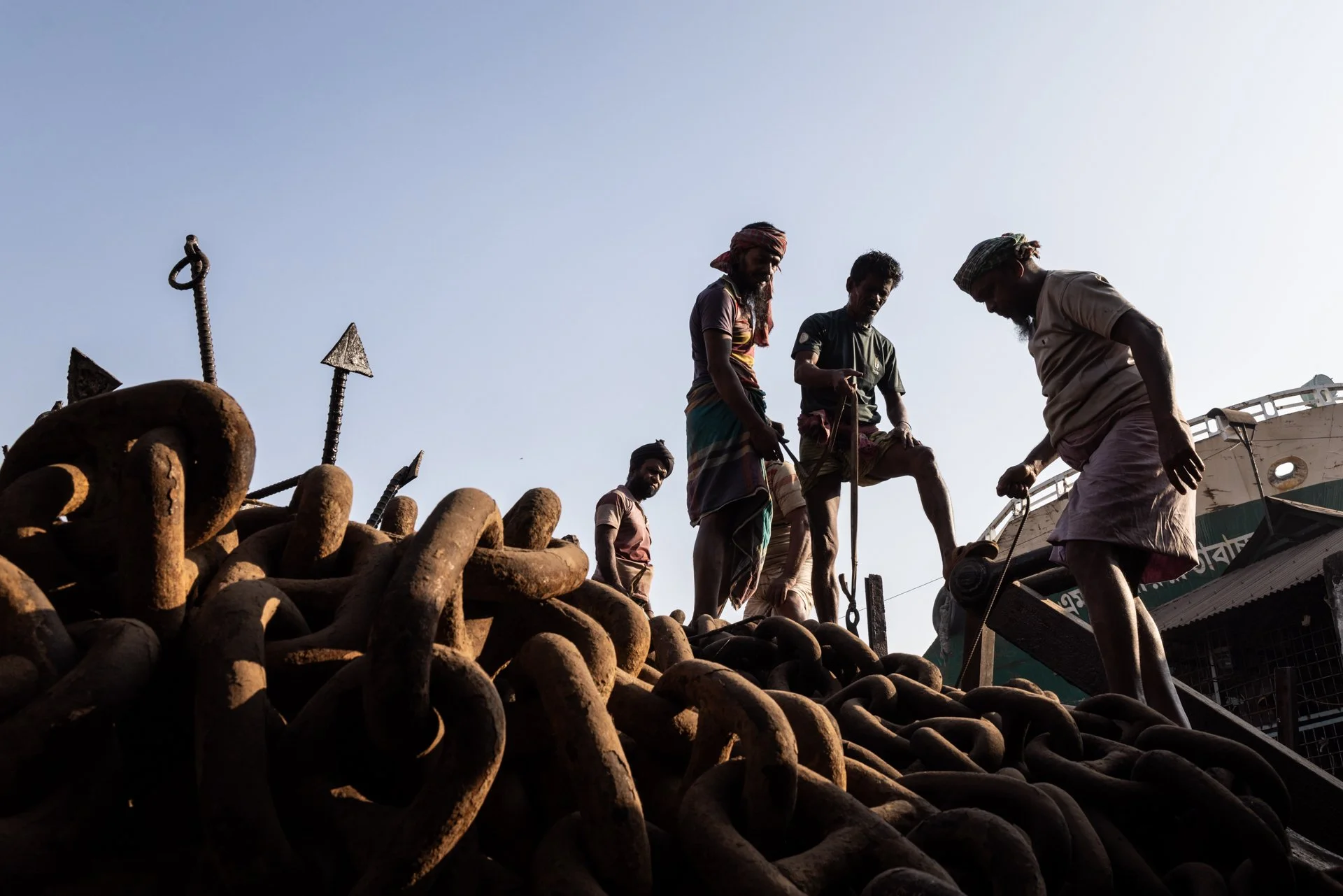
We then entered the shipyard, photographing workers hammering massive metal hulls. We watched groups of men carrying enormous propellers into small wooden boats — always impressive to see what people can lift using nothing but their bare hands.
Throughout the morning, we kept shooting, chatting with locals, and explaining where we were all from. Next year, I may come back wearing a T-shirt saying “I am from France (desh)!”
We continued walking the streets, focusing on pockets of light and composition. Everyone had a solid photography background, so we could already dive into more advanced techniques. One participant even shot exclusively with a phone — a first for me on a longer photo workshop in Bangladesh — but it quickly proved that photography is about vision, not gear.
These narrow streets offer endless photographic opportunities, often even more interesting than the shipyard itself. Thanks to the soft Bangladeshi light, we were able to shoot comfortably until around 9:30 am.
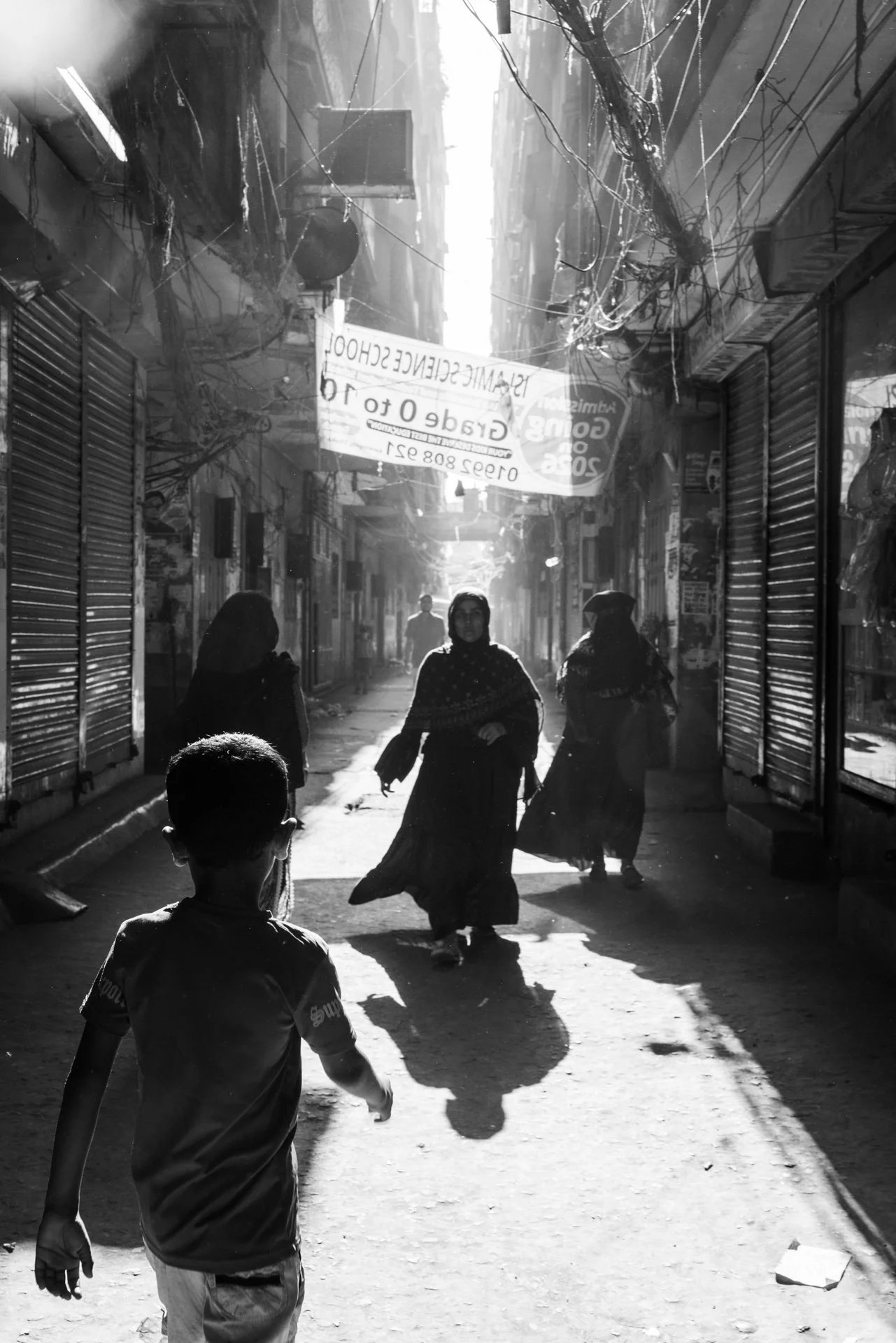
After a hotel break and a very satisfying biryani lunch, we headed to the Kerwan Bazar area, walking along the railway tracks. I was amazed by how much the area had changed in just three years, with massive overpasses and a new metro system reshaping the city. Dhaka is evolving fast, hopefully making daily life a bit easier for its people.
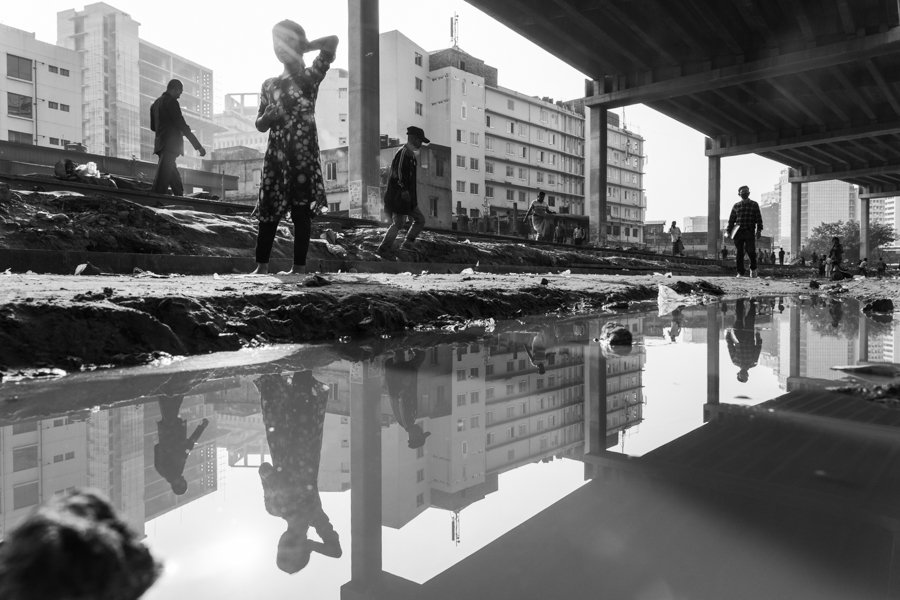
We spent the late afternoon and early evening photographing the colourful chaos of Kerwan Bazar, working on mixing artificial light with sunset tones — something we would repeat many times during this photography tour.
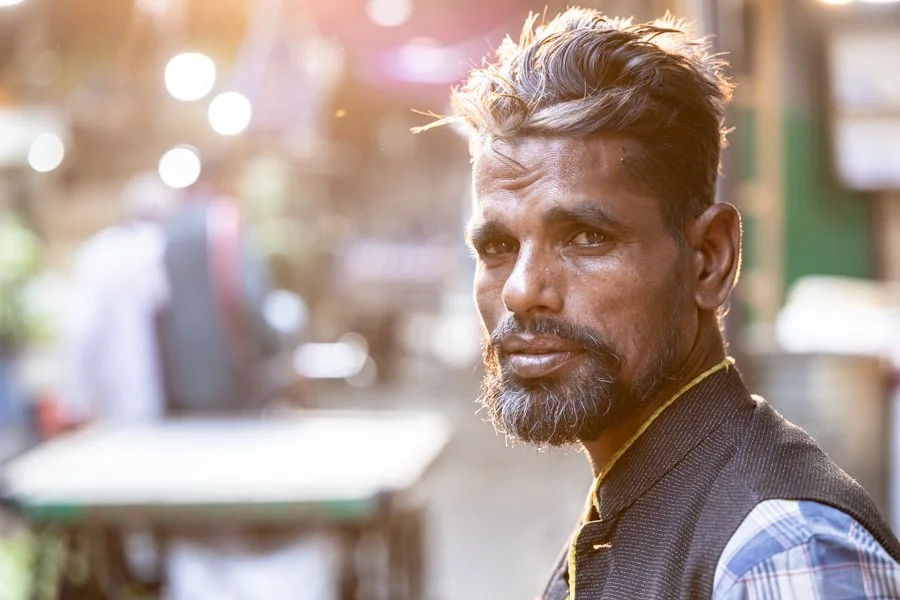
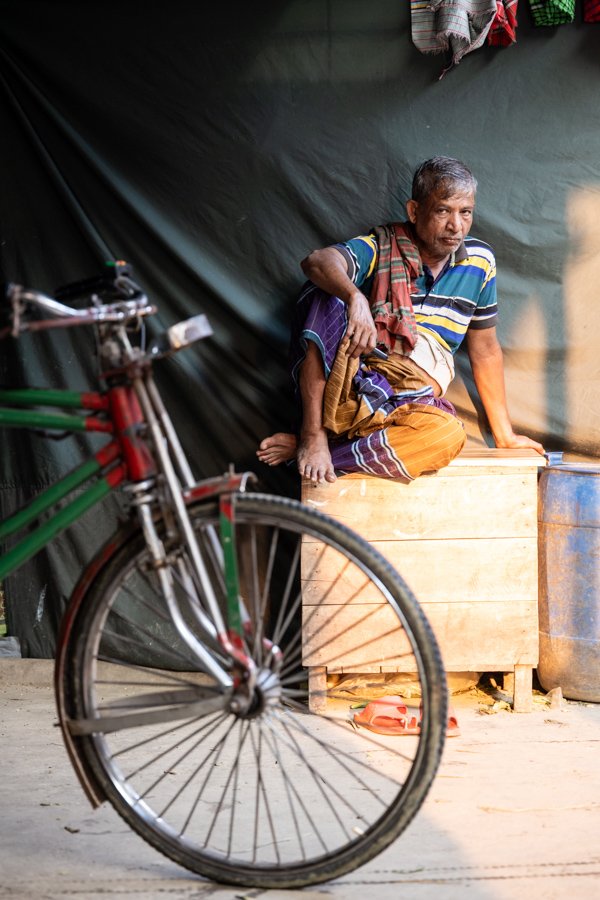
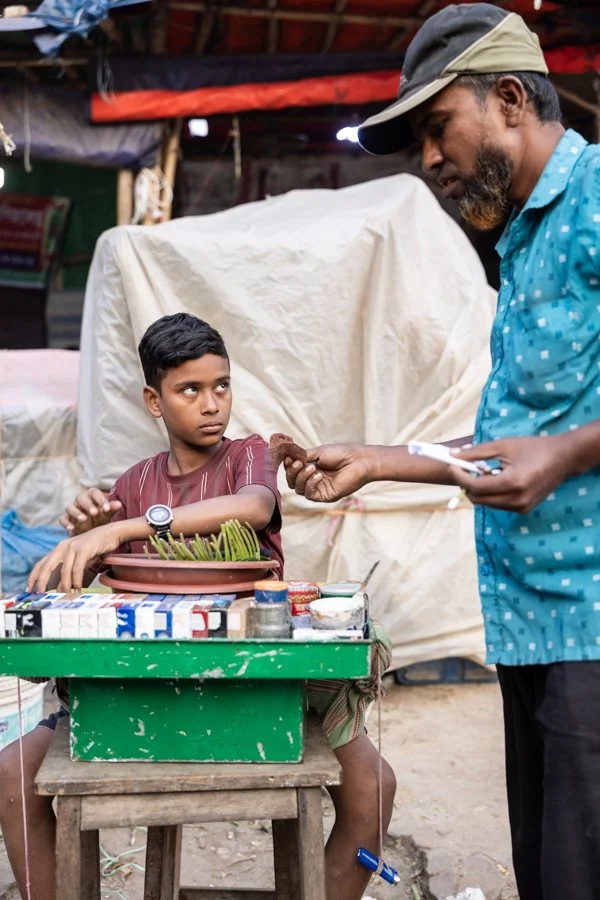
Dinner was supposed to be simple. Instead, we met the restaurant owners in the elevator, ended up chatting, took selfies, and they paid for the entire meal. Incredible people. Bangladesh was already delivering.
Day 3 — Hard Work, Soft Light & Documentary Photography
Another essential location we’ve been visiting on this Bangladesh photography tour for over ten years. We left early to photograph people unloading sand, rocks, and coal from boats along the river. The morning light was perfect. We talked with workers about their daily routines — 2 taka per trip, about 250 trips per day. Roughly four dollars for extremely hard labour. I spoke with a man named Milane, who has worked there for two years. Despite the conditions, people were welcoming and eager to talk.
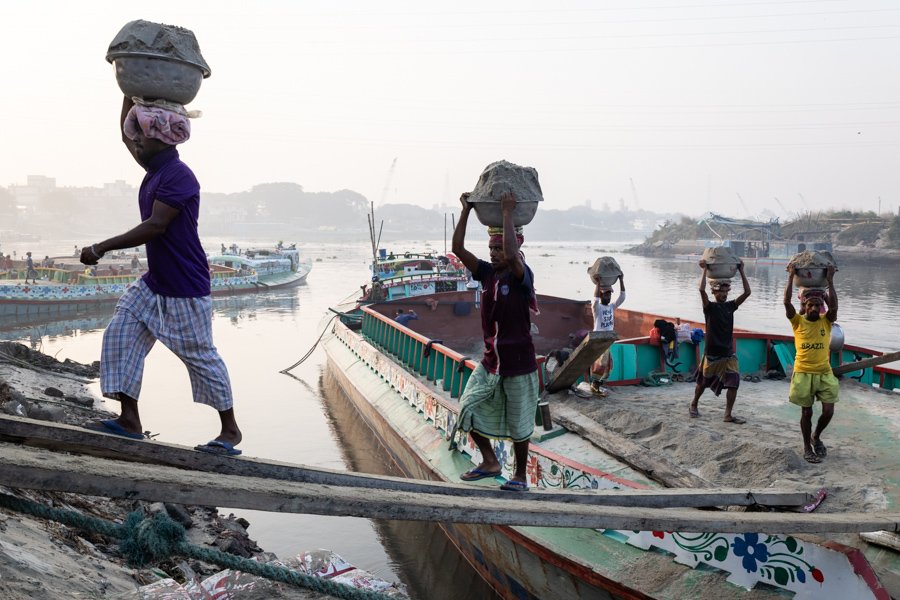
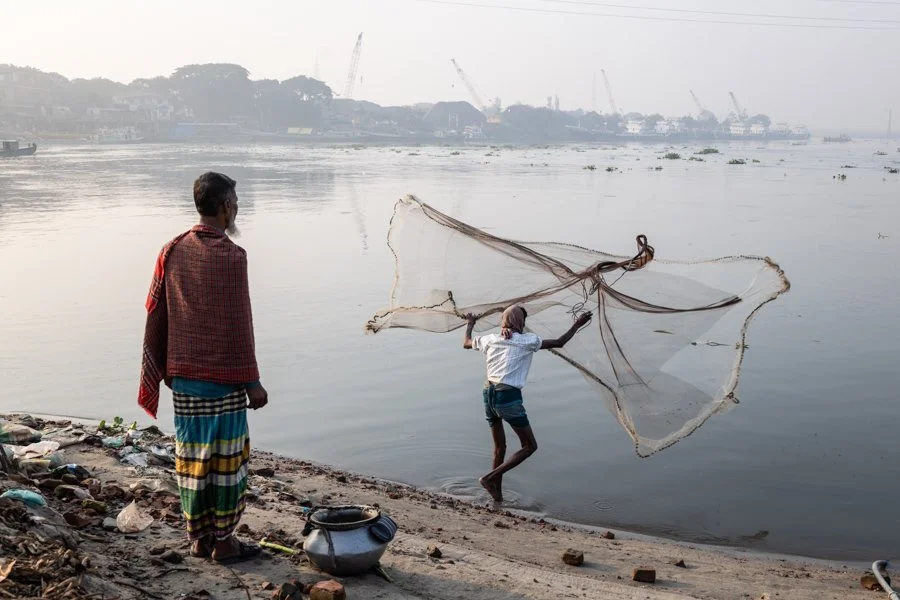
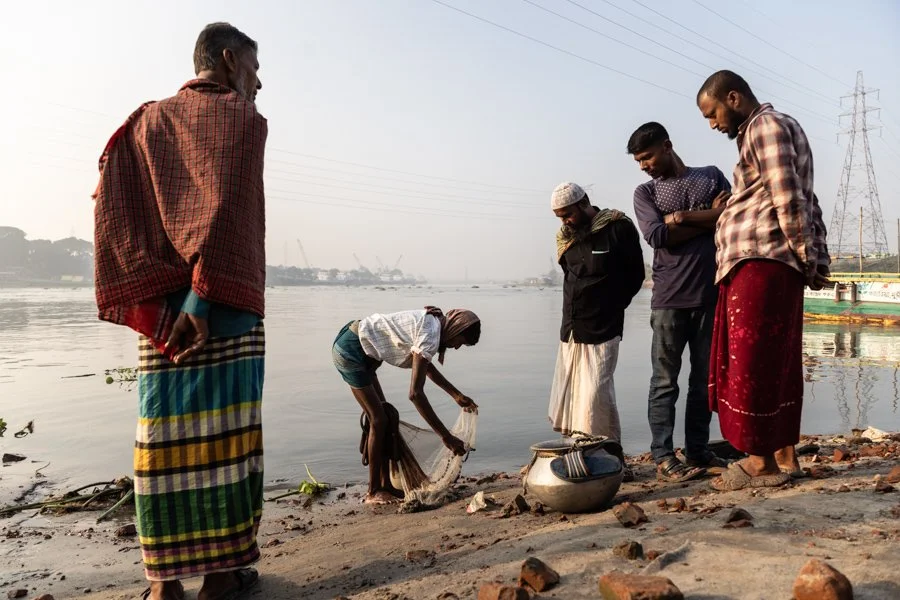
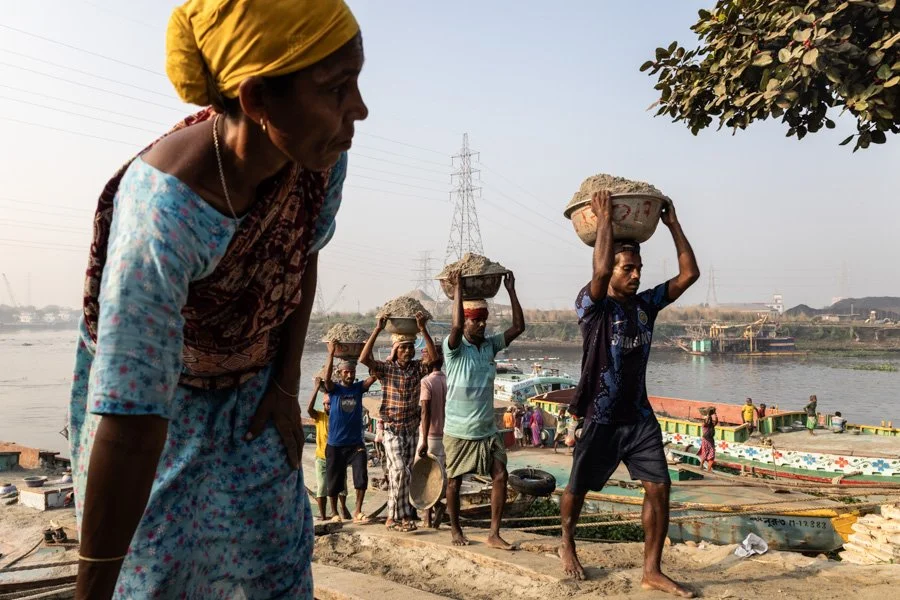
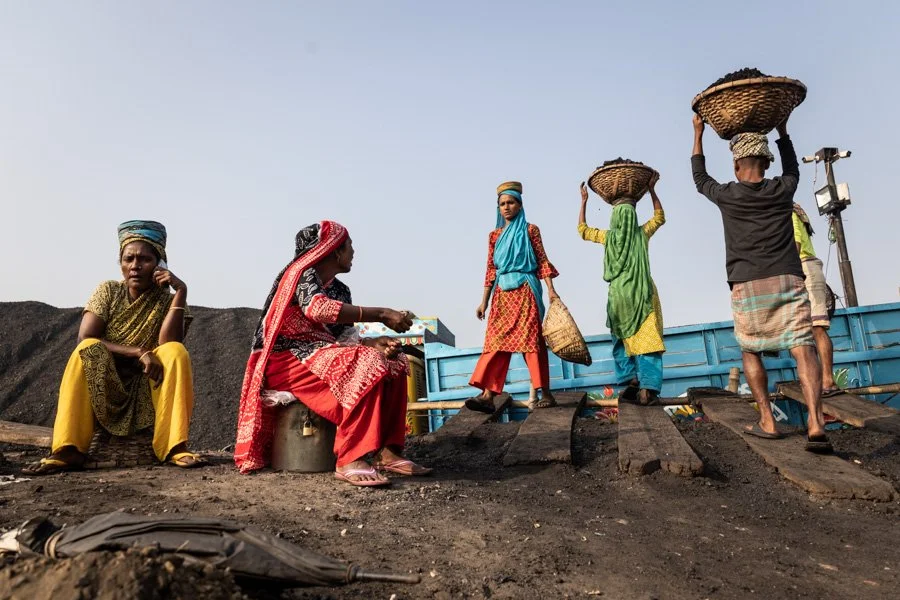
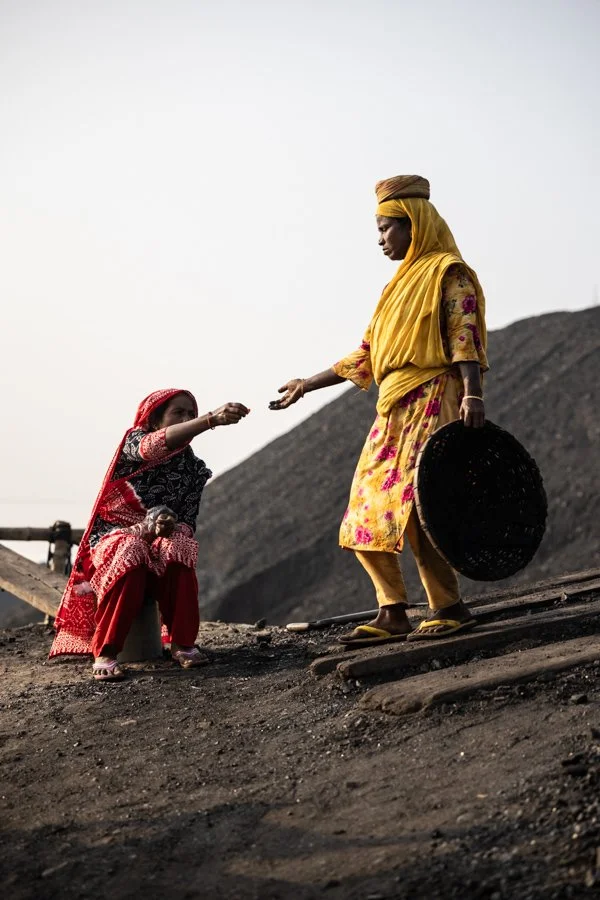
Later, we bought snacks from nearby shops to share with the workers — a small gesture of thanks for letting us document their lives.
After a late breakfast and a “rest” (meaning image uploads and photo selection), we headed into the narrow streets of Old Dhaka’s vegetable market. Dust, strong smells of onion and chilli, endless activity. Locals asked where we were from, posed enthusiastically, and sometimes over-posed for portraits.
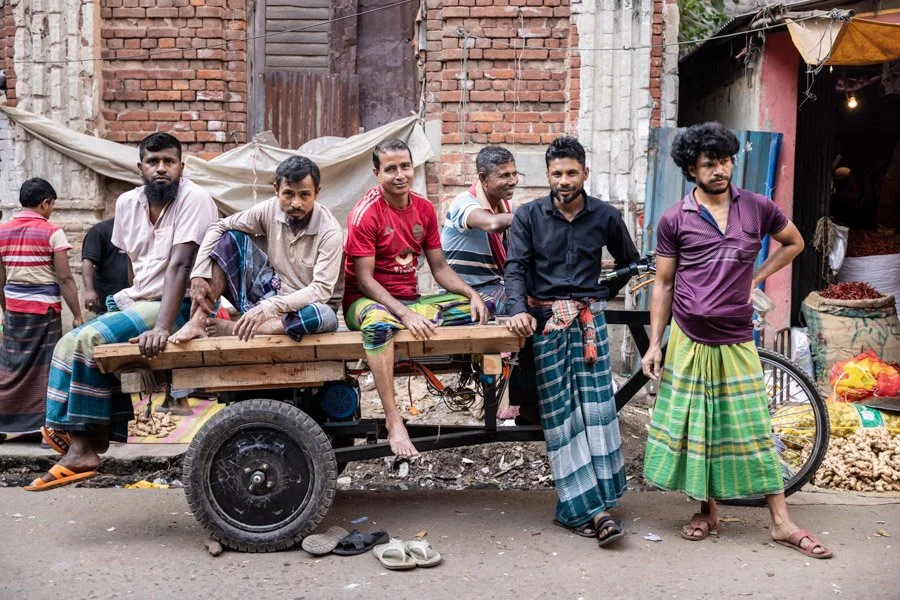
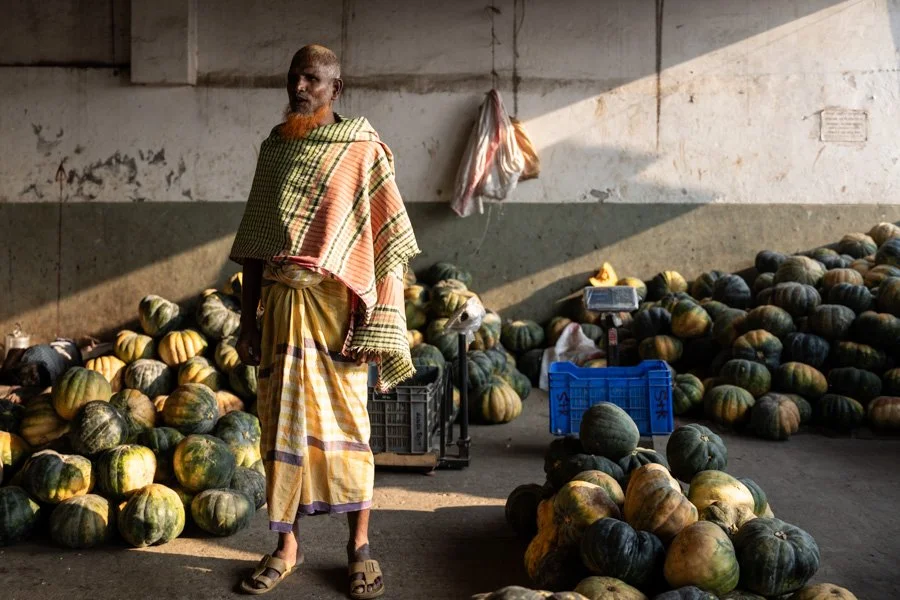
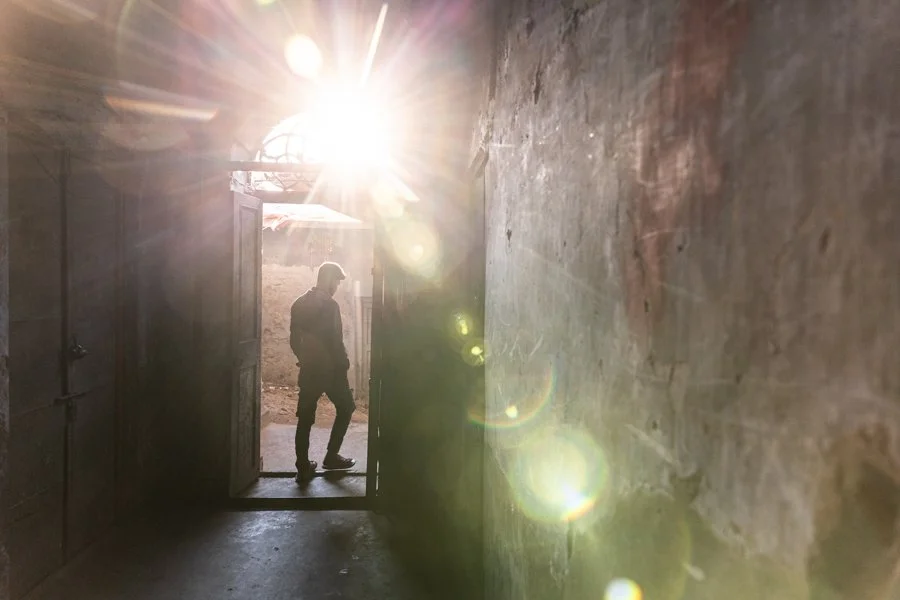
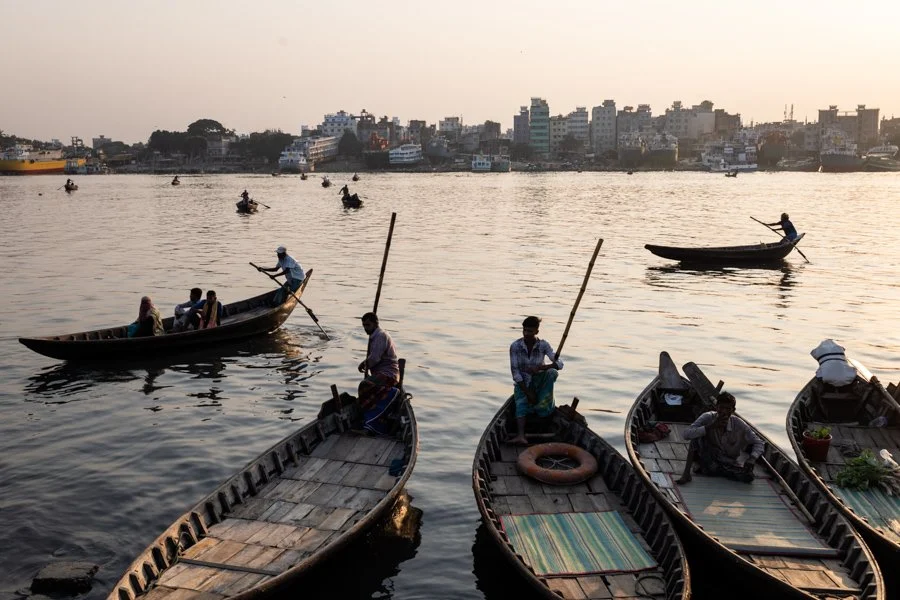
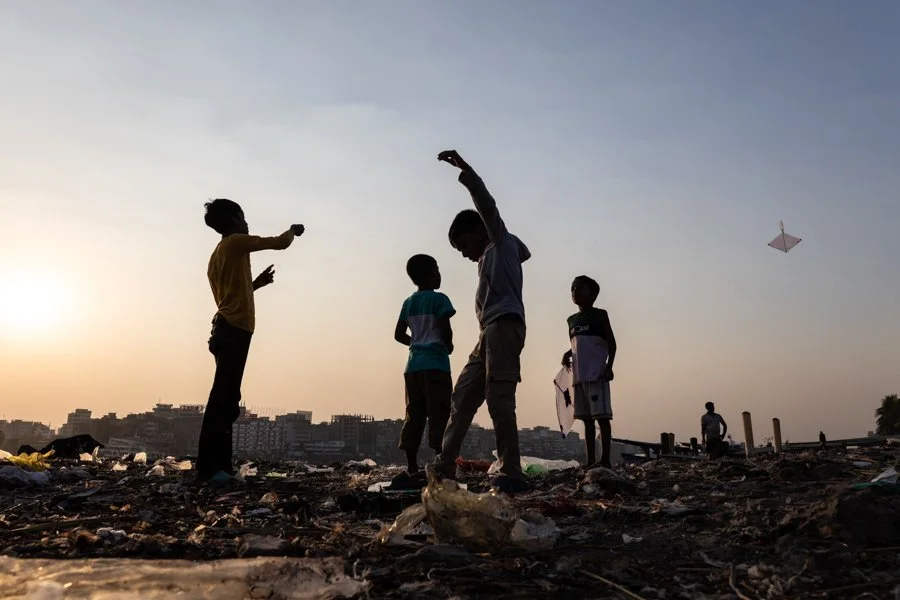
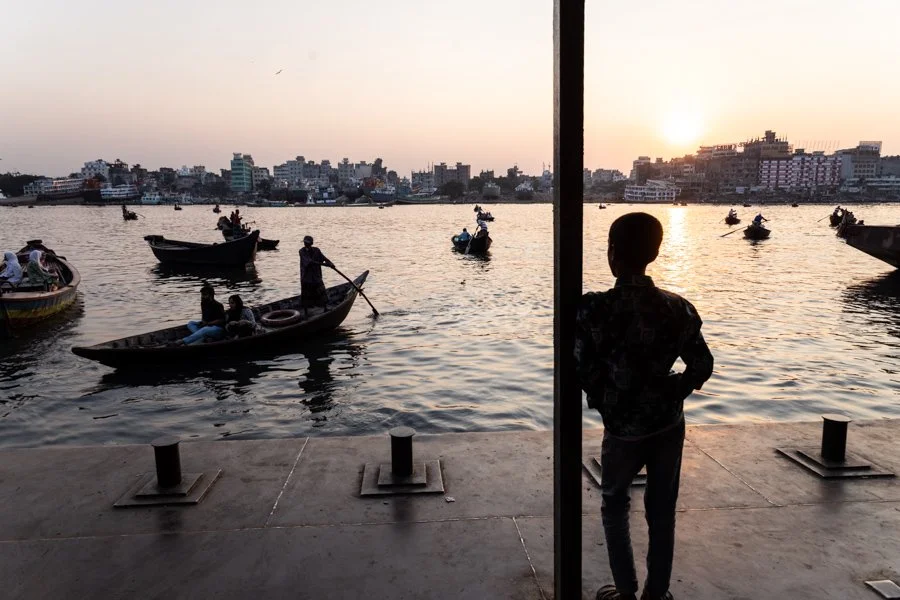
We worked on light, composition, portraits, and visual storytelling, before ending the day with a rooftop dinner overlooking the river — followed by a wild rickshaw ride through traffic. Our driver was incredibly proud to be carrying foreigners and made sure everyone knew it. Bangladesh never disappoints.
Day 4 — Leaving Dhaka (Mentally and Physically)
After several intense days in Dhaka, it was time to move on and head toward smaller cities. Smaller by Bangladeshi standards, meaning still busy, still noisy, but with a very different rhythm. We left early for the airport to catch our flight to Rajshahi, and as usual, travelling in Bangladesh delivered a full set of interactions, conversations, curious looks, and unexpected friendliness.
What I always enjoy during these transitions is how approachable people are. Waiting areas quickly turn into small discussion hubs, and within minutes, everyone wants to know where you are from, what you are doing, and why you chose Bangladesh. Photography tours here are still rare, and curiosity is genuine.
Once in Rajshahi, we headed straight into the streets. Compared to Dhaka, the atmosphere felt calmer, slower, almost relaxed. We walked through neighbourhoods filled with colour, textured walls, hanging laundry, and people going about their daily routines. At first, some were surprised to see us, but that hesitation quickly turned into smiles and permission to photograph.
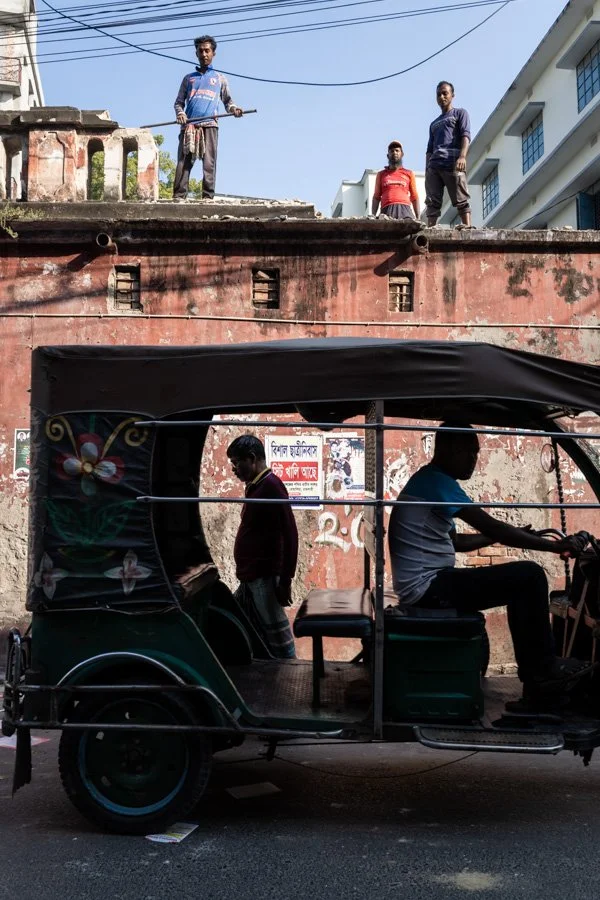
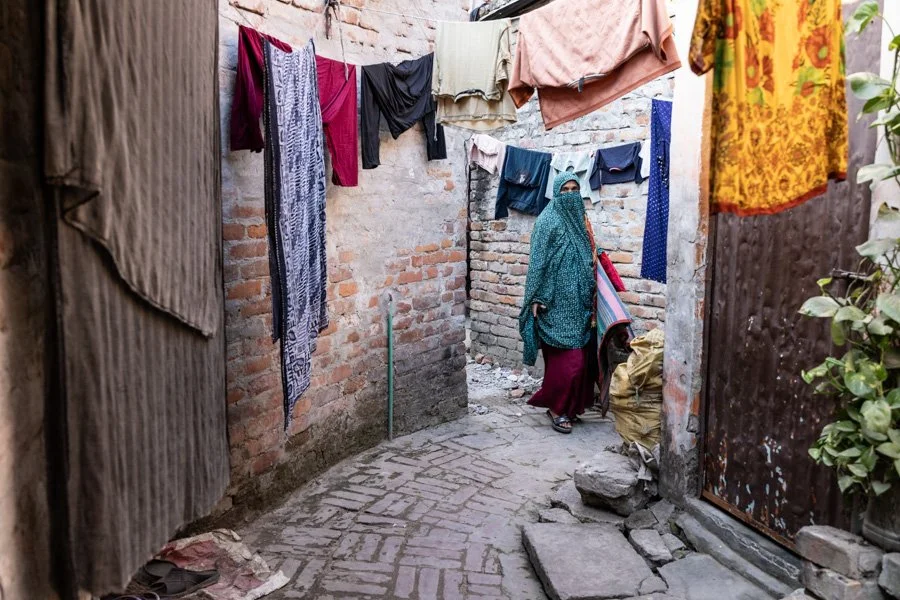
We worked on candid street photography, observing light, waiting for gestures, and letting scenes build naturally. No pressure, no rush — just walking, watching, and shooting.
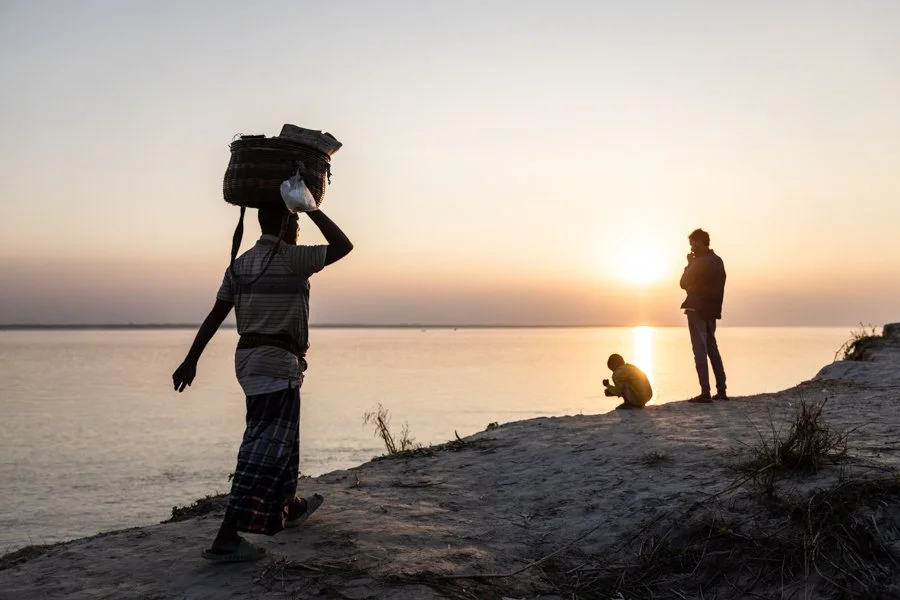
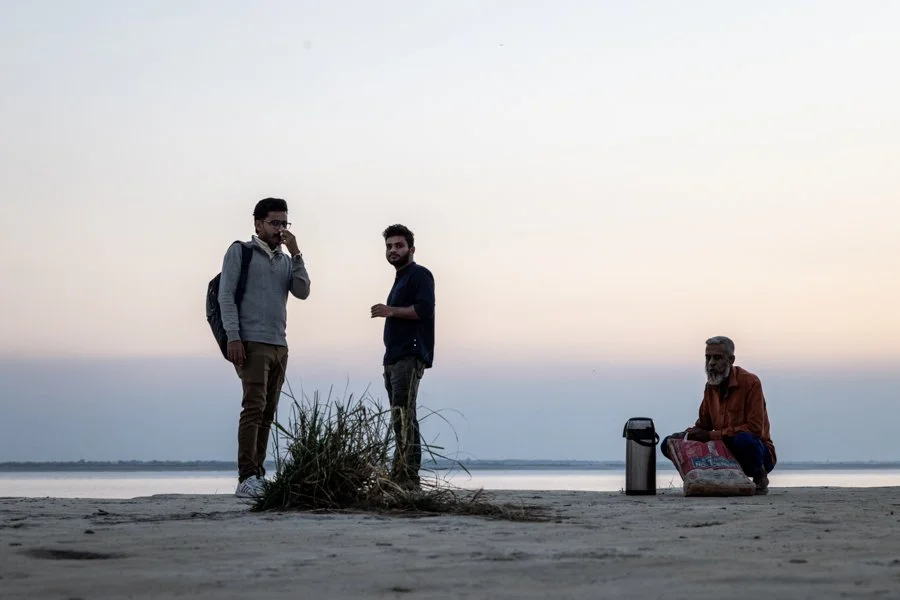
As sunset approached, we made our way to the river. Groups of locals gathered, selfies happened (lots of them), and conversations continued. The light was soft, reflections beautiful, and the mood peaceful. A perfect way to end a transition day on this photography tour in Bangladesh.
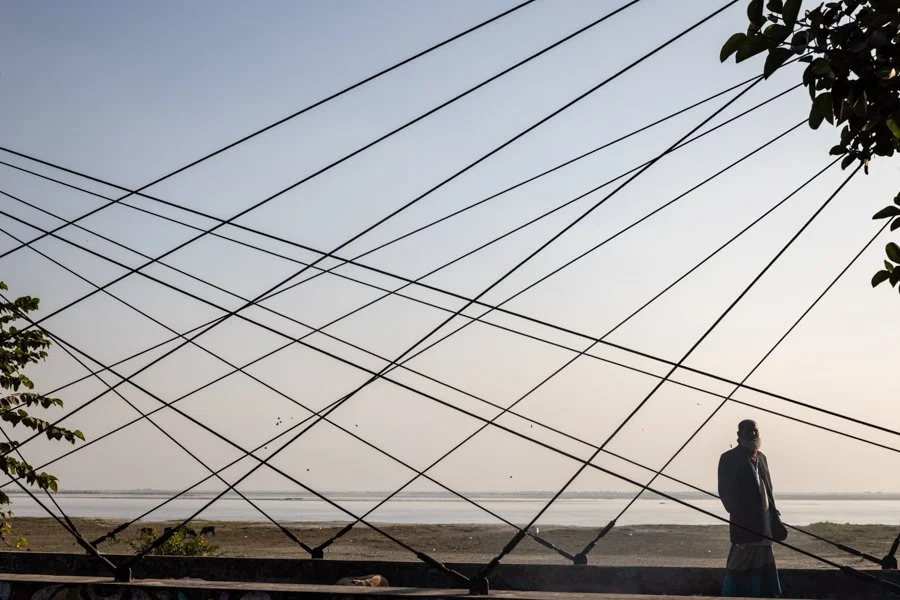
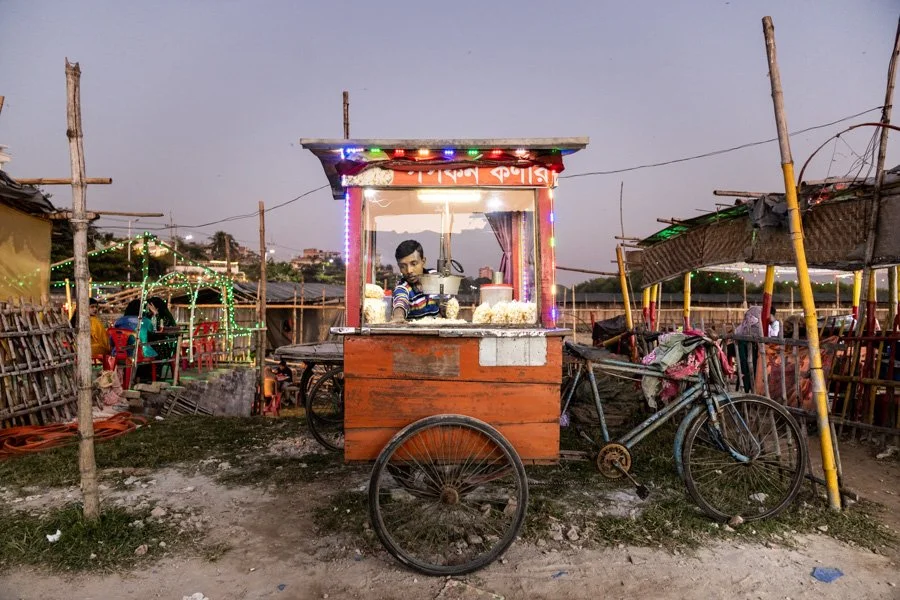
Dinner followed, and yes — very good food again. Writing this while travelling, I’m starting to wonder how much weight I’ve gained since day one.
Day 5 — Markets, Roads, and the Joy of Constant Stops
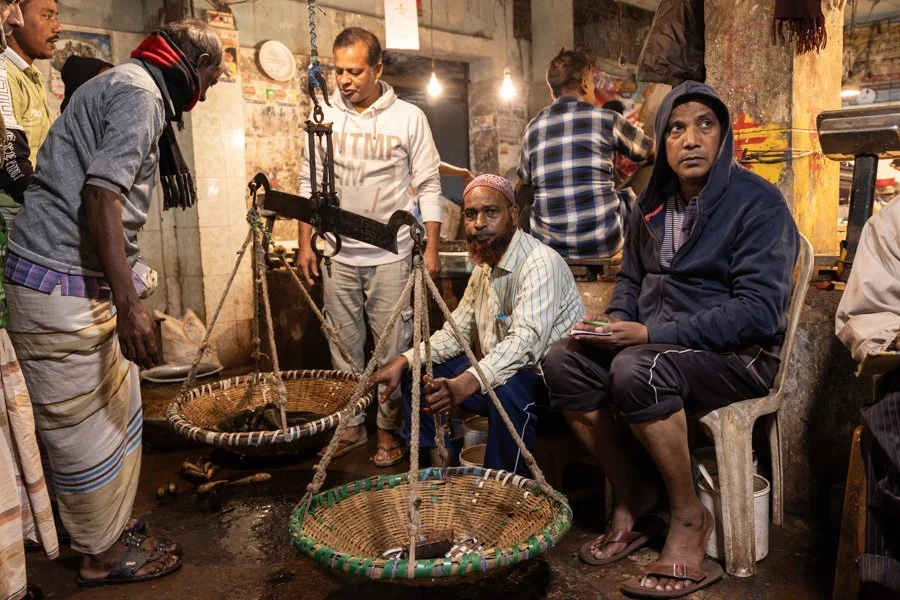
We started the day with a visit to Rajshahi’s local market. Not an easy one. Busy, chaotic, visually overwhelming at first. Exactly the kind of place where photographers need to slow down, breathe, and learn how to isolate moments within disorder. We spent time working on composition, light direction, and anticipating gestures rather than chasing everything at once.
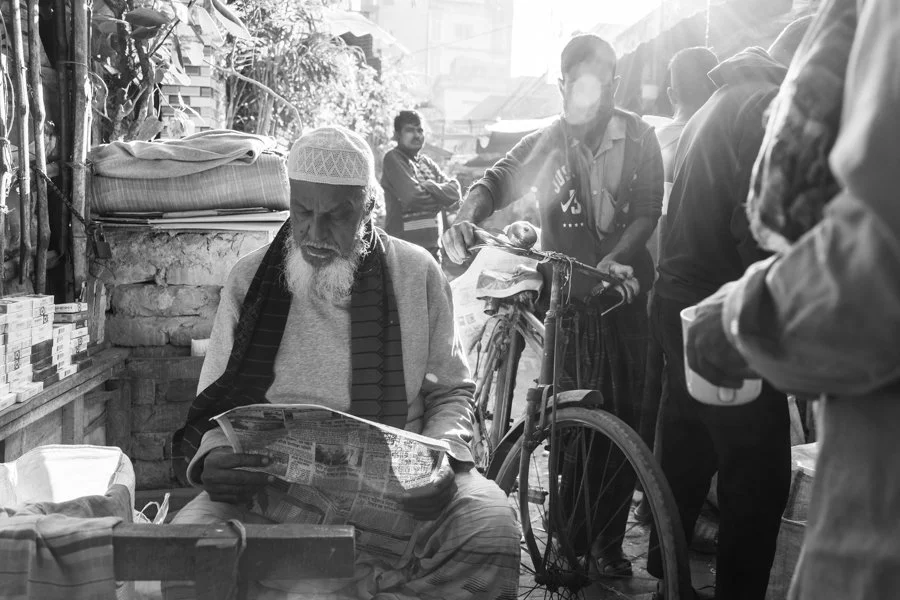
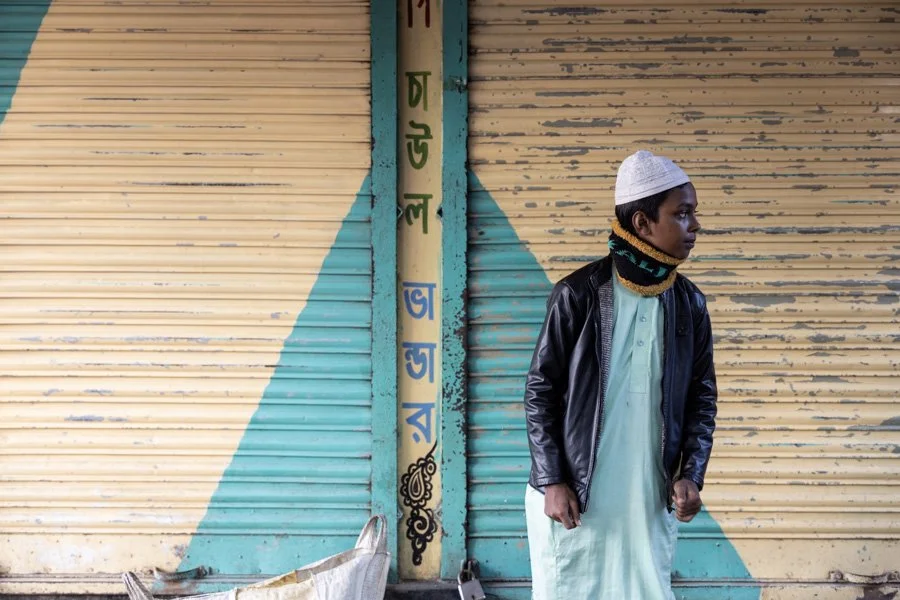
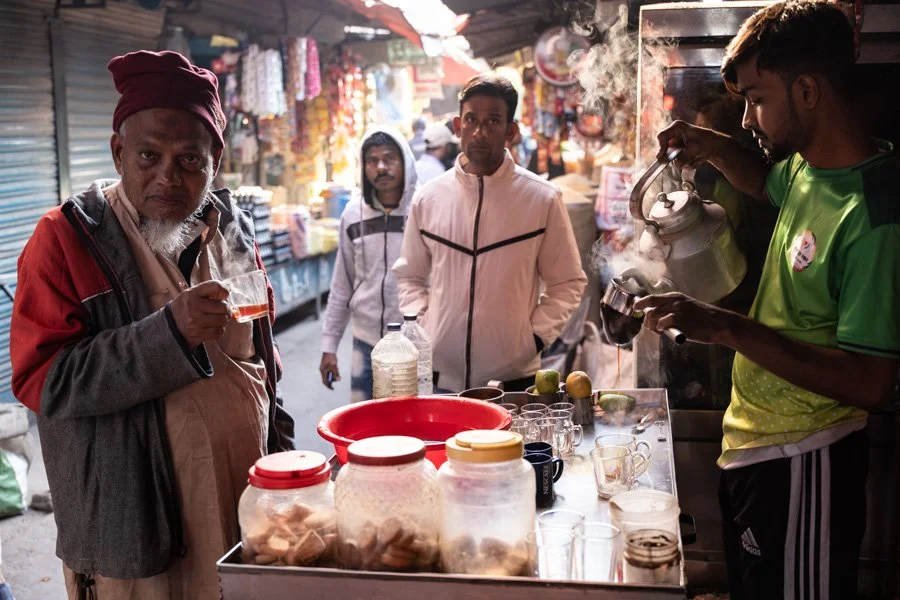
After breakfast, we hit the road toward Bogra. And this is where Bangladesh truly shines for photography. Every few kilometres, something pulled us to stop: roadside banana markets, food stalls, fishermen, women drying fish, small workshops, and spontaneous portraits with people who had clearly never seen tourists before.
These stops were not planned. They never are. And that’s the whole point. Some of the strongest images often come from places you didn’t even know existed ten minutes earlier.
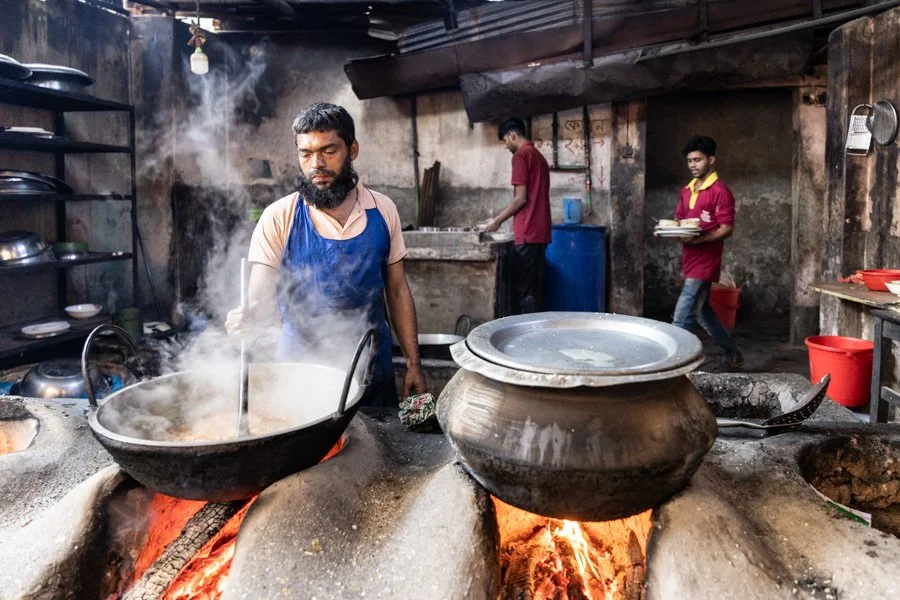
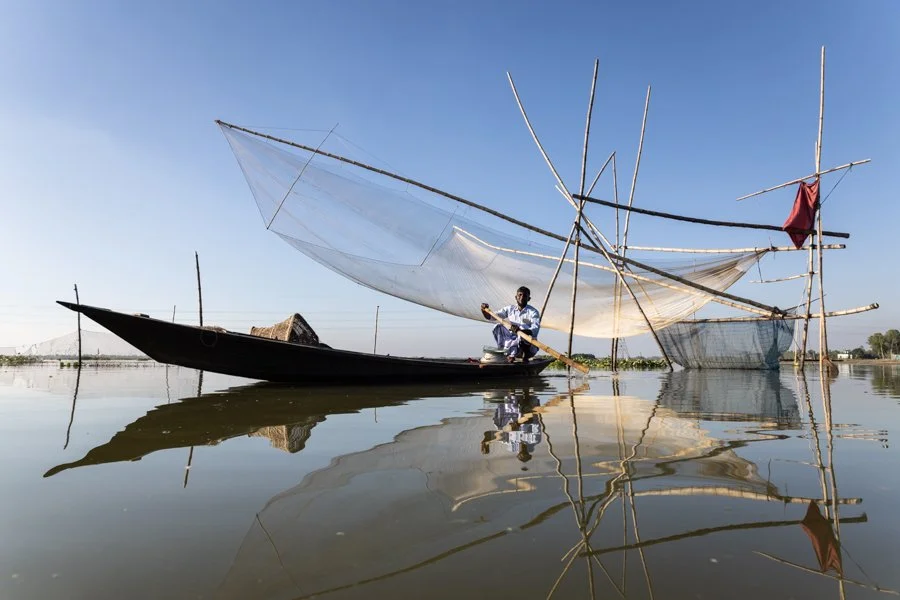
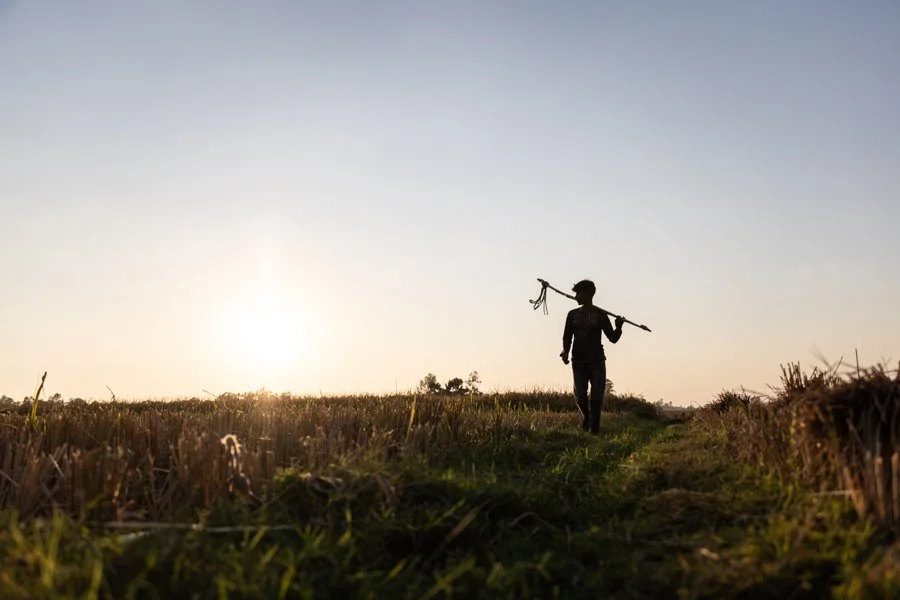
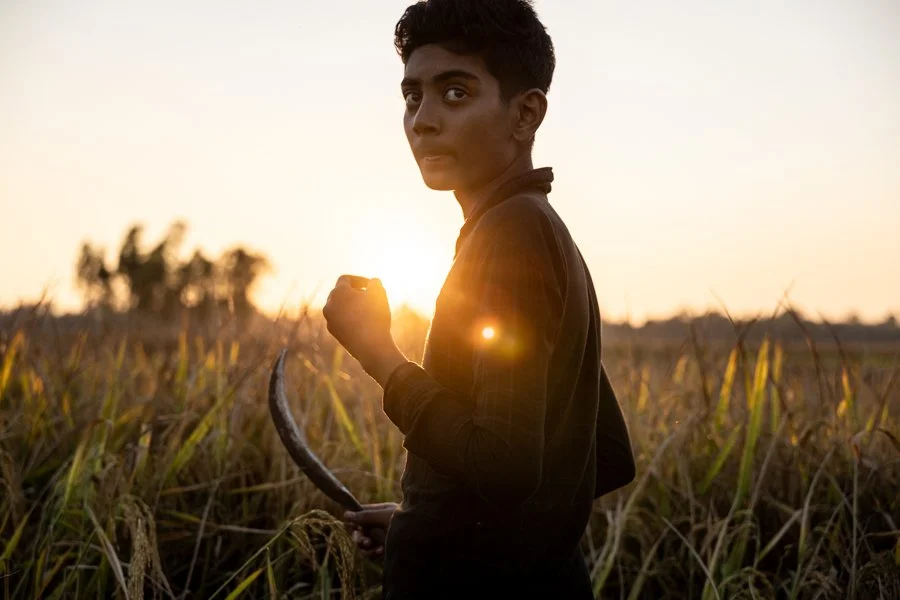
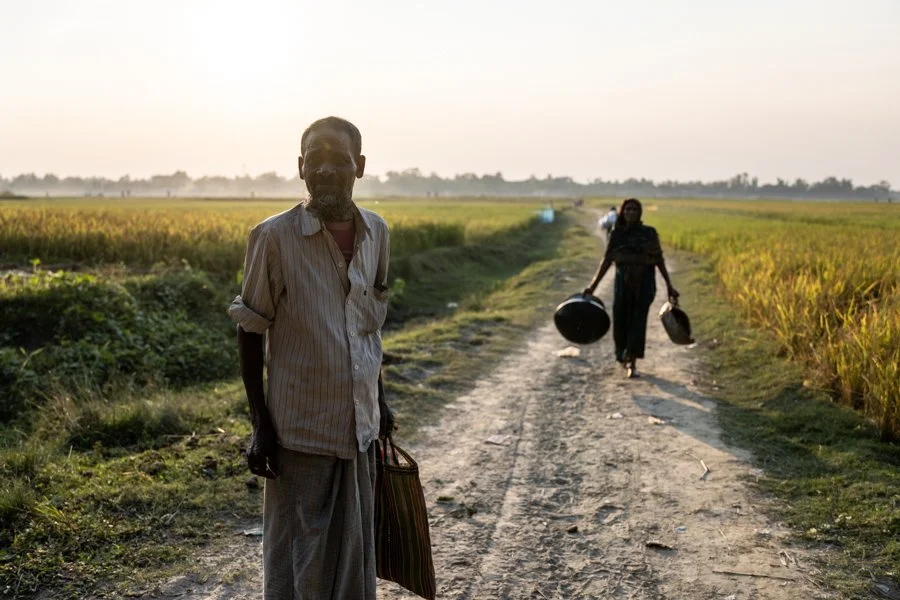
As the afternoon progressed, the light softened, and we reached rice fields glowing under the late sun. Farmers were working, children running around, and the landscape opened up beautifully. Everyone kept shooting until the very last light.
In the evening, tradition demanded a visit to the local bar. Ordering gin turned into a lesson in cultural adaptation. Tonic water was apparently a foreign concept. 7Up was the solution. Not ideal, but after a long day of travelling and photographing, we accepted our fate and laughed about it. Another solid day of travelling and photographing Bangladesh.
Day 6 — Markets, Rivers, and One of Those Evenings
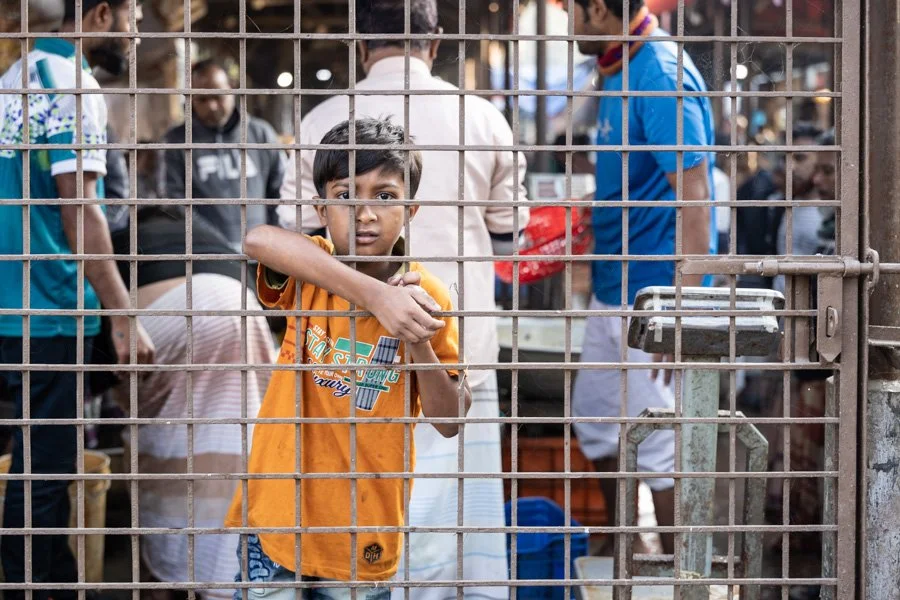
We began the day in Bogra’s city market, one of my favourite locations for people photography in Bangladesh. The structure of the market creates incredible light — beams filtering through broken roofs, dust in the air, layered scenes everywhere. It’s challenging, but incredibly rewarding.
We spent hours moving slowly through the market, focusing on storytelling, portraits, and how to use light creatively in difficult environments. Nearby, we stumbled upon a fish and banana section that I had never seen before, proving once again that even after years of running a photo workshop in Bangladesh, there’s always something new to discover.
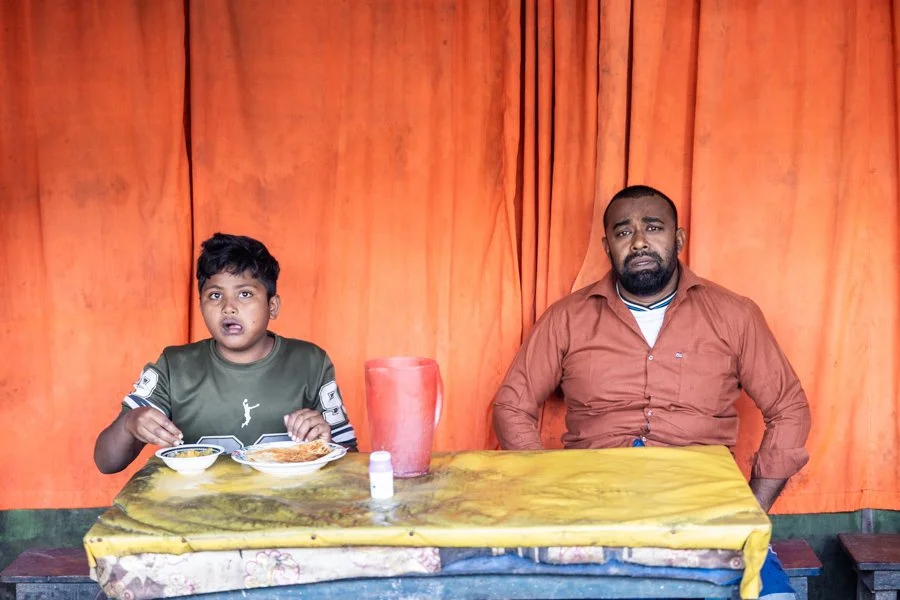
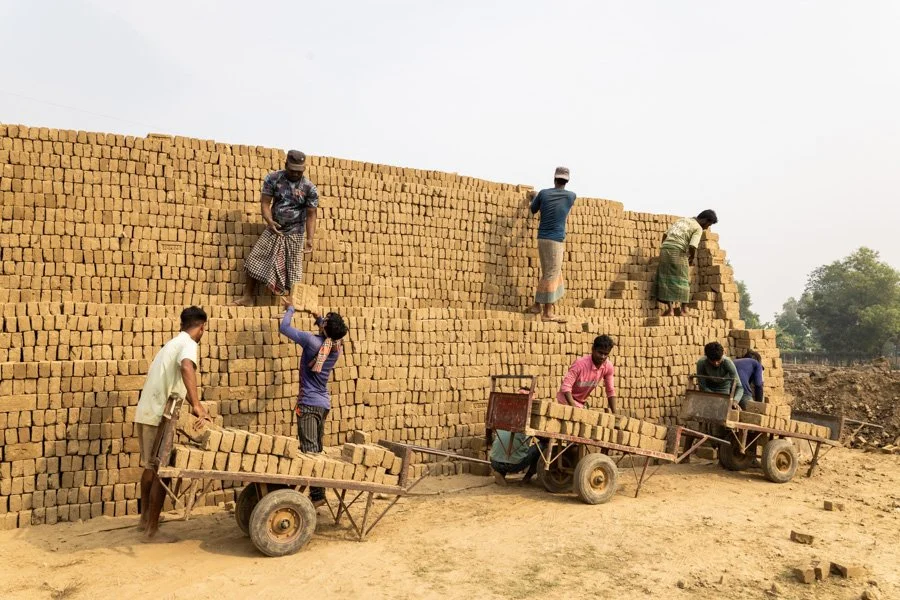
After a short break, we headed toward the Brahmaputra River, stopping along the way at brick factories. Workers covered in dust, strong graphic lines, and repetitive movements offered powerful documentary scenes.
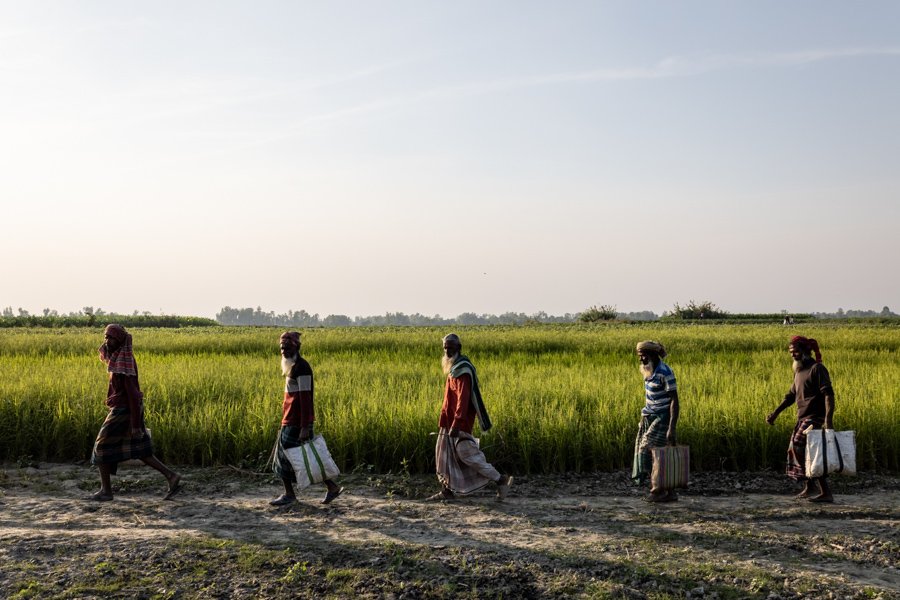
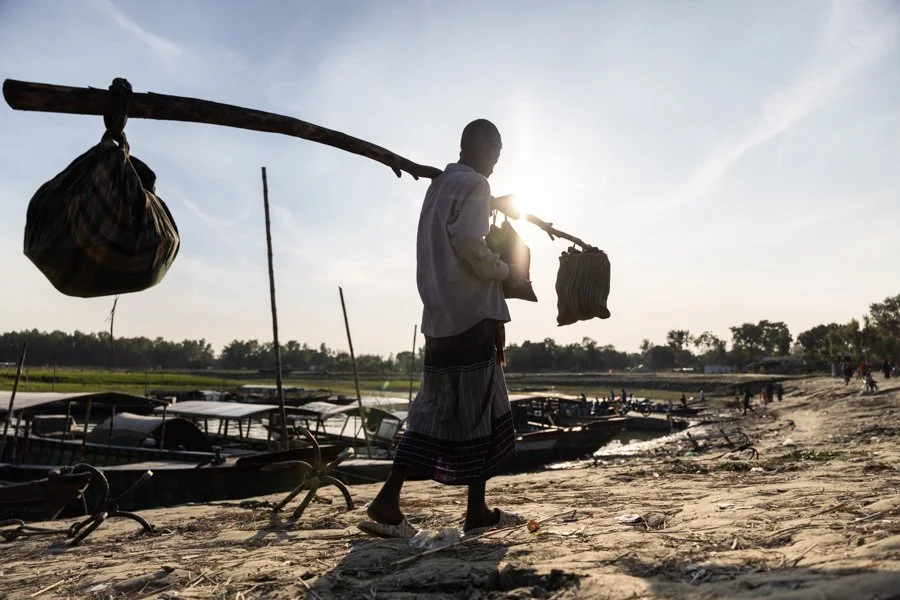
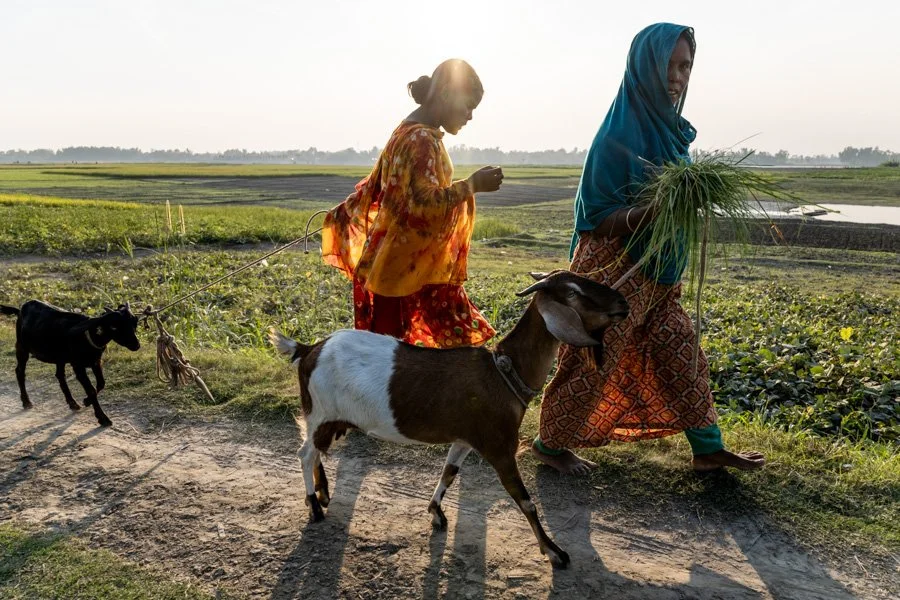
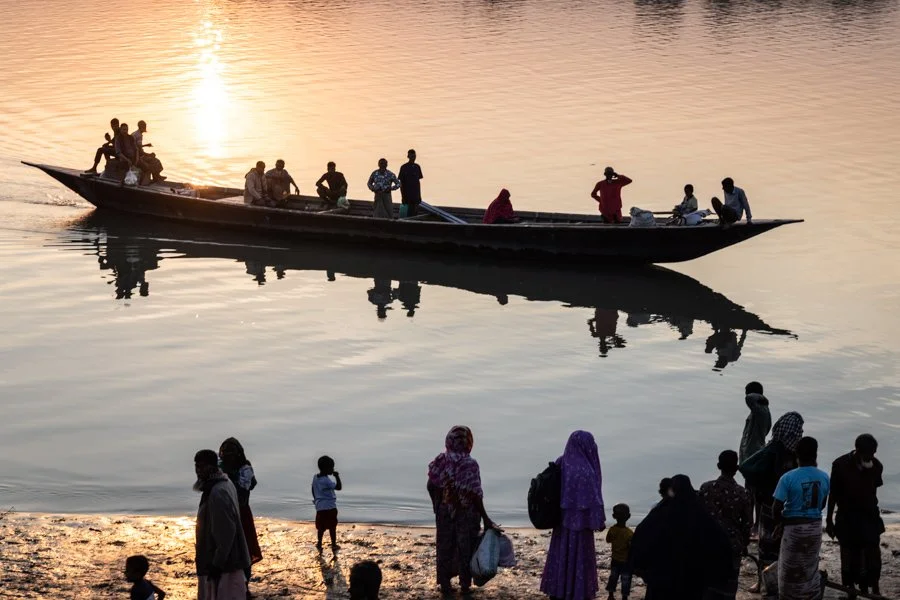
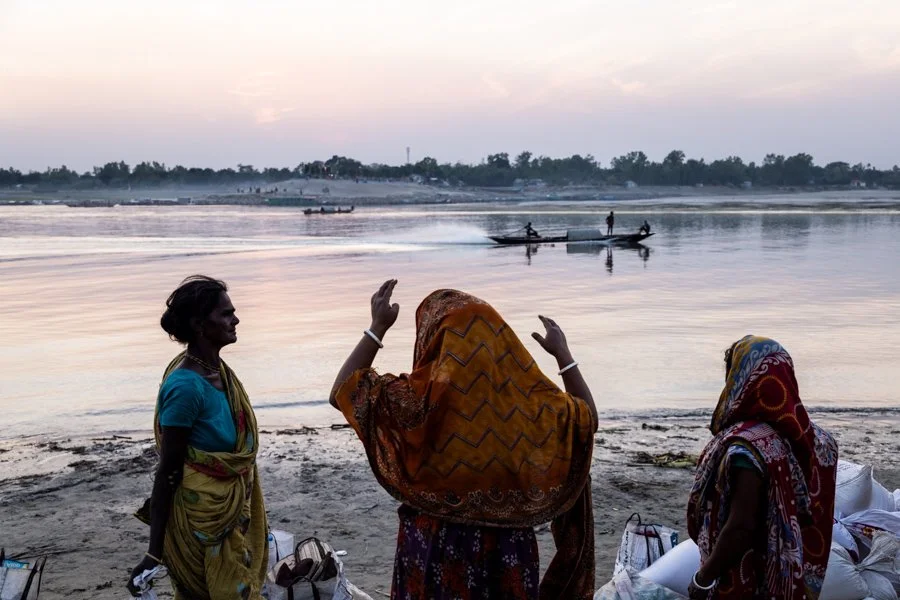
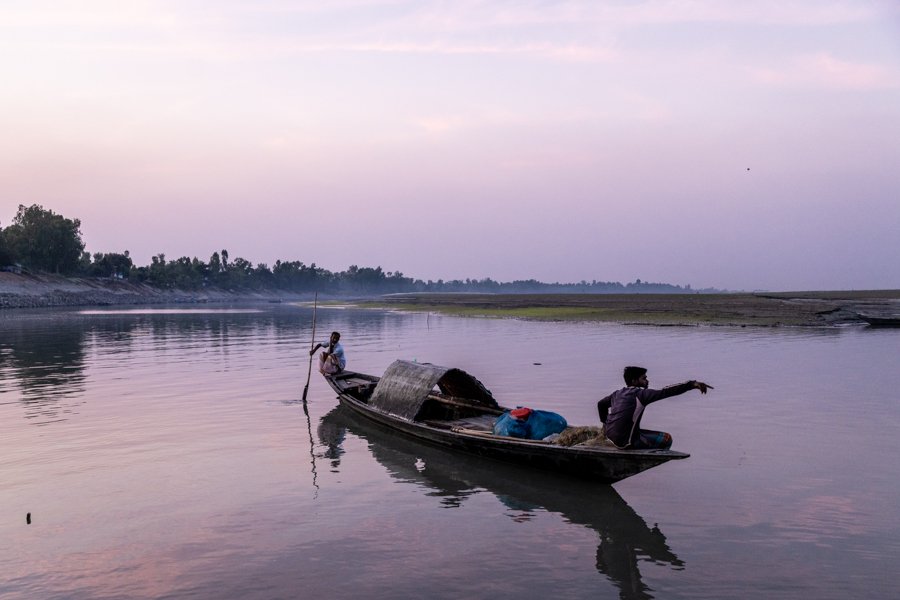
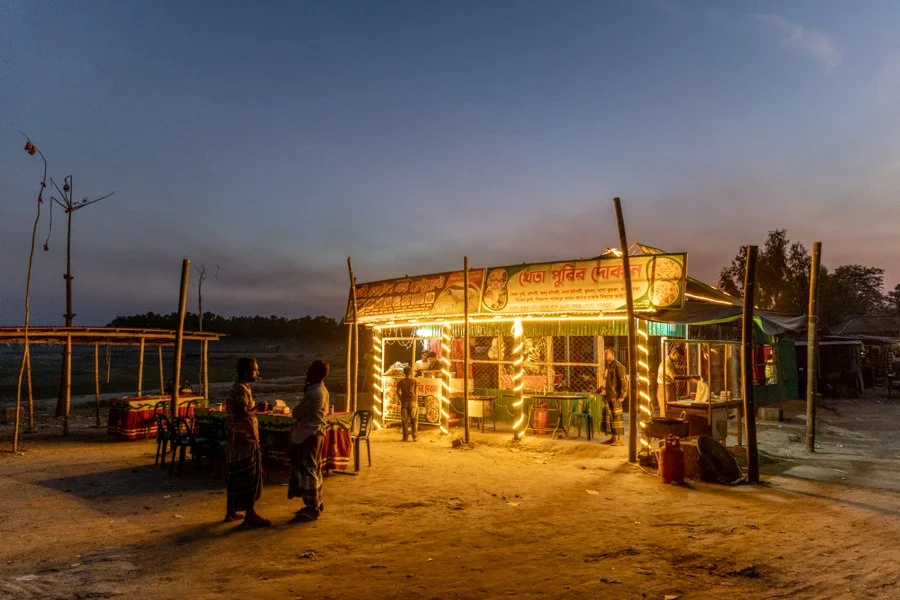
Crossing the river by boat, we reached a small village on the other side. Kids immediately surrounded us and proudly became our guides. Farmers returned from the fields, boats crossed the river, and reflections slowly appeared as the light faded.
This was one of those evenings where everything aligns — light, people, atmosphere. No rushing, no staging, just observing and photographing real life as it unfolded. Easily one of the highlights of the entire photography tour.
Day 7 — Early Markets, Brick Dust, and Quiet Villages
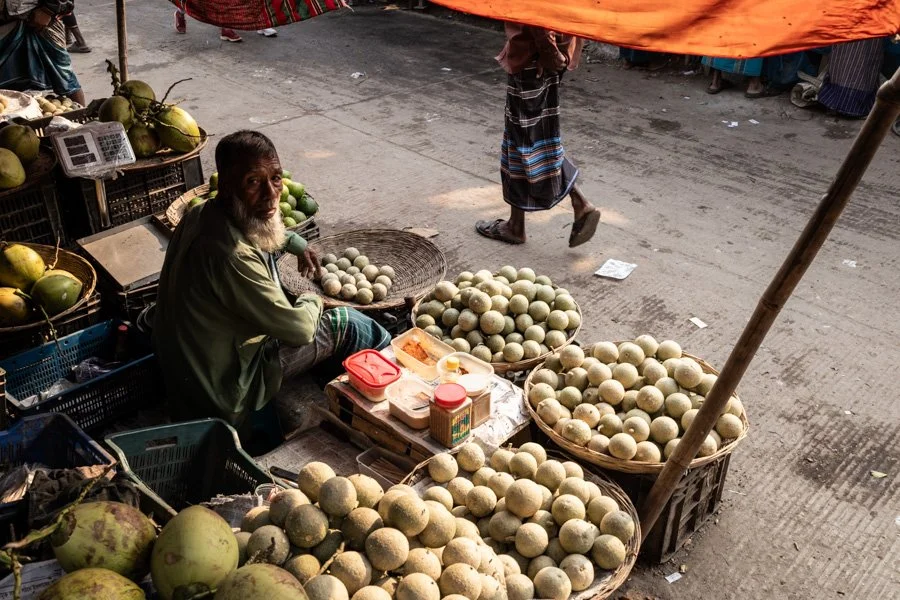
The day started early at Bogra’s vegetable market, even busier than before. Hundreds of people arrived from surrounding villages, unloading produce, negotiating prices, and moving fast. The energy was intense, and the photographic opportunities endless.
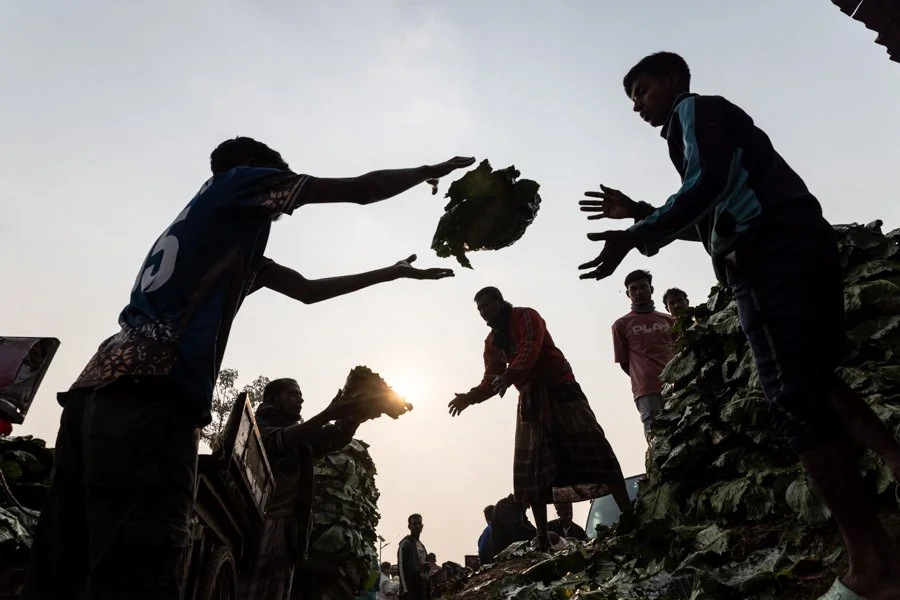
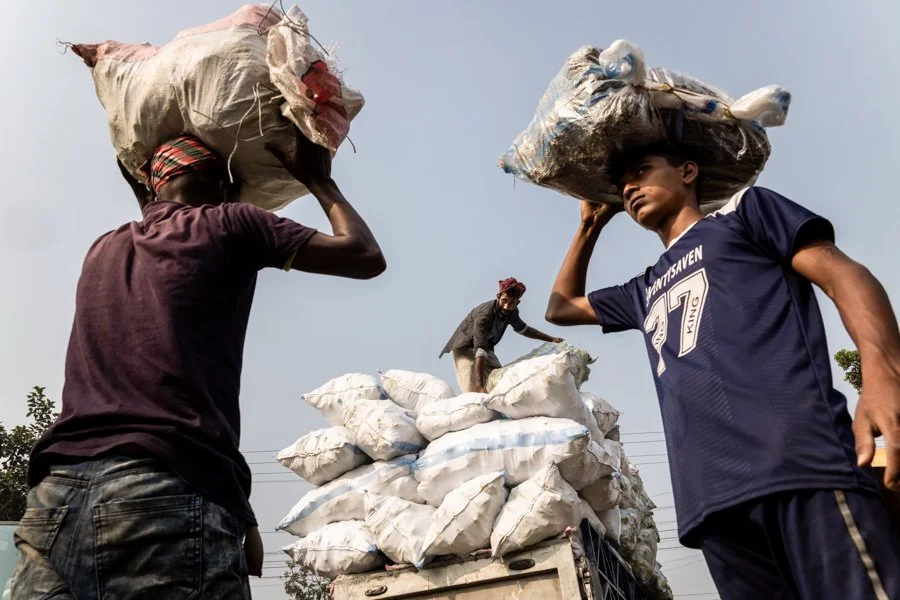
Later, we visited a brick factory where something unexpected happened: the owner recognised me from previous years. After a quick conversation, he welcomed us back as old friends. Moments like this remind me how strong impressions can be made when you return to the same places over time.
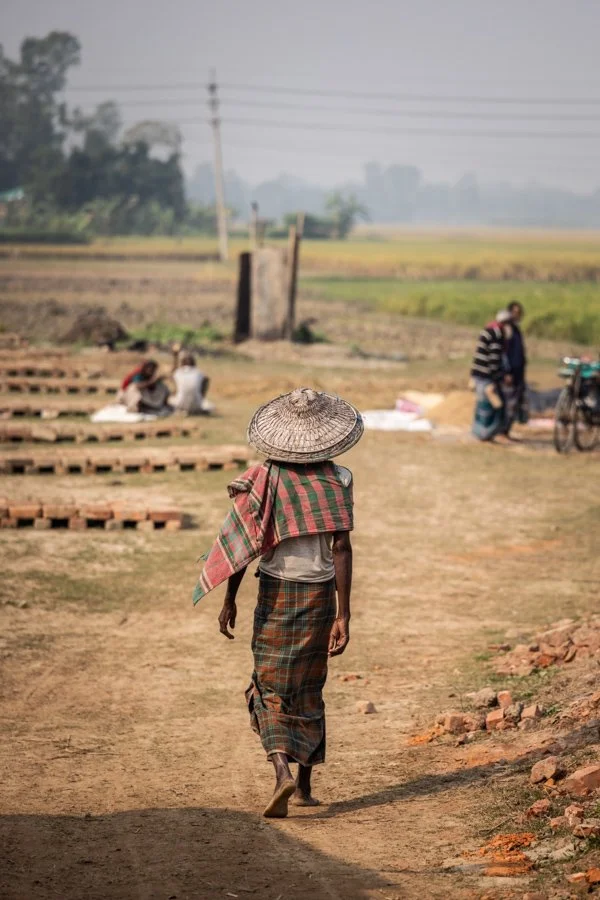
We then continued toward Dinajpur, stopping along the way whenever something caught our attention. Rice drying on the ground, colourful village scenes, children waving, and daily life unfolding at its own pace. These quieter moments balanced the chaos of the markets perfectly.
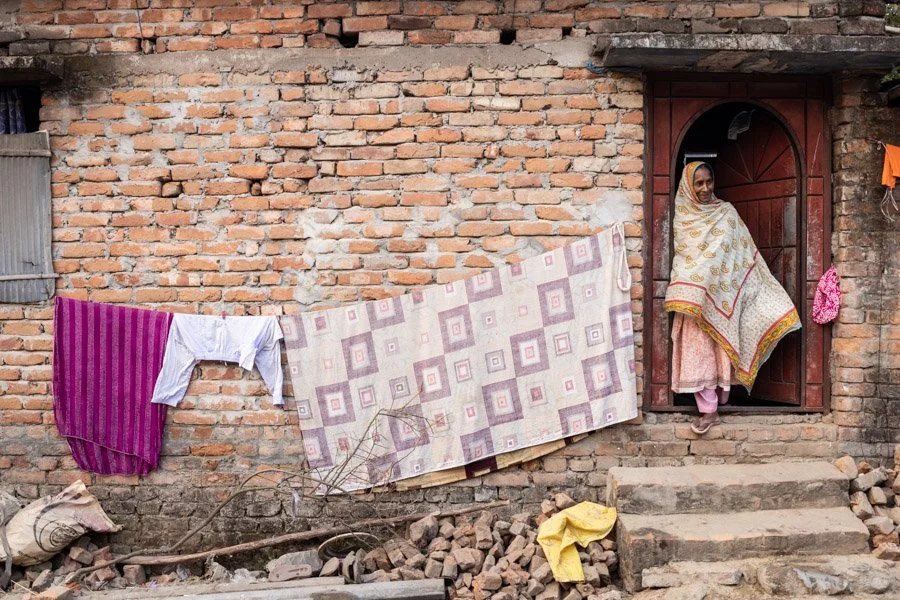
As the day came to an end, we reached Dinajpur and headed out for dinner — on what could generously be described as the city’s most “upscale” rooftop. Nothing fancy, but a great place to sit, talk, review images, and reflect on the past few days.
Another full, varied day of travelling, observing, and photographing people in Bangladesh — exactly what this tour is all about.
Day 8 — Crossing the Country
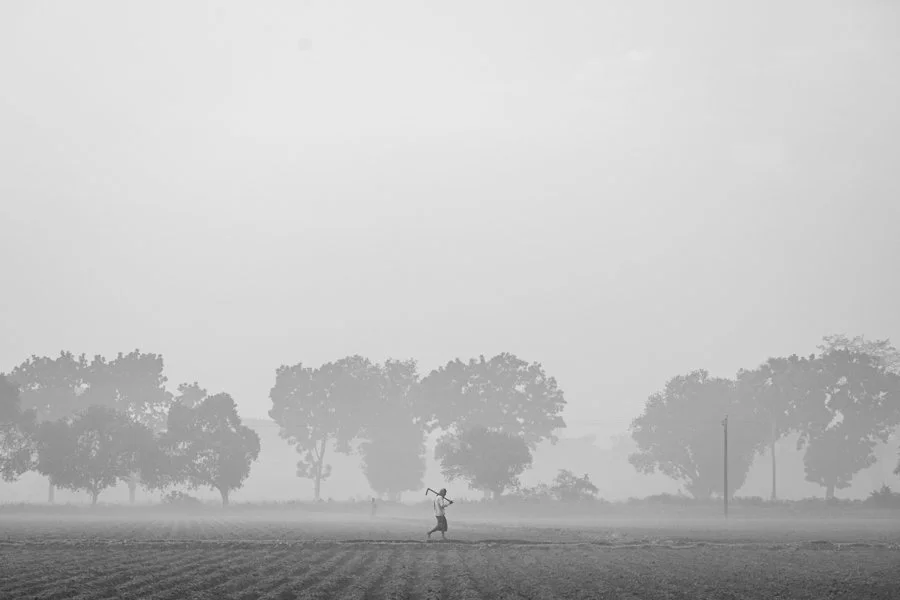
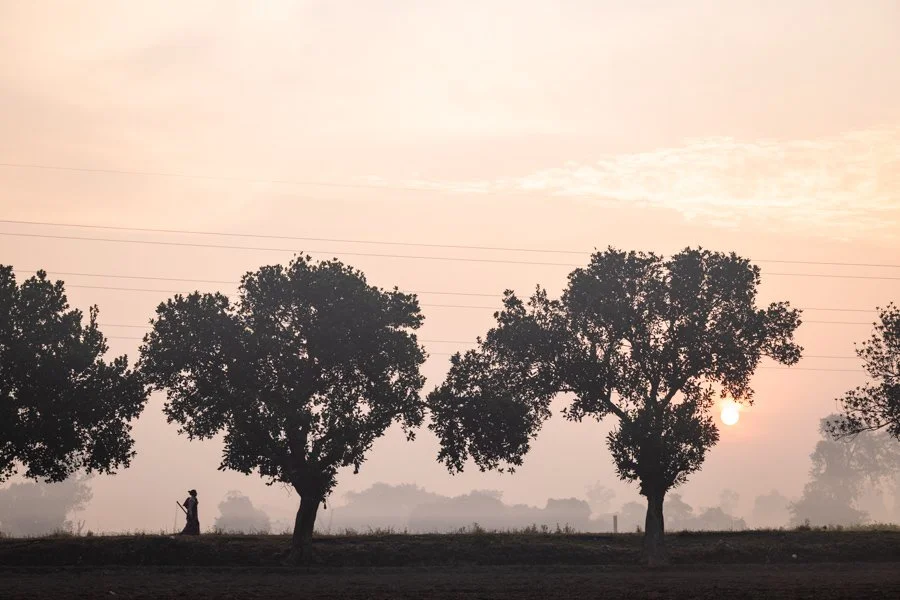
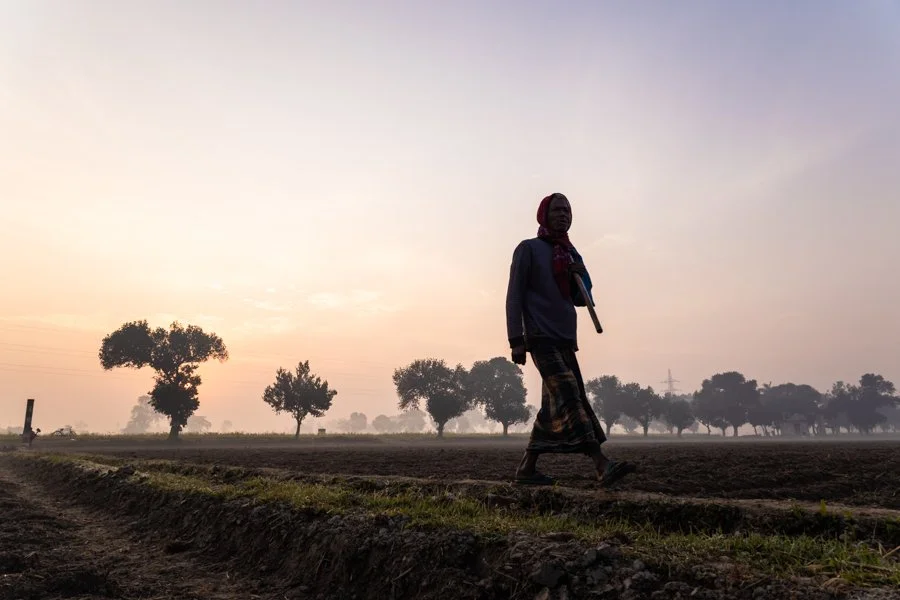
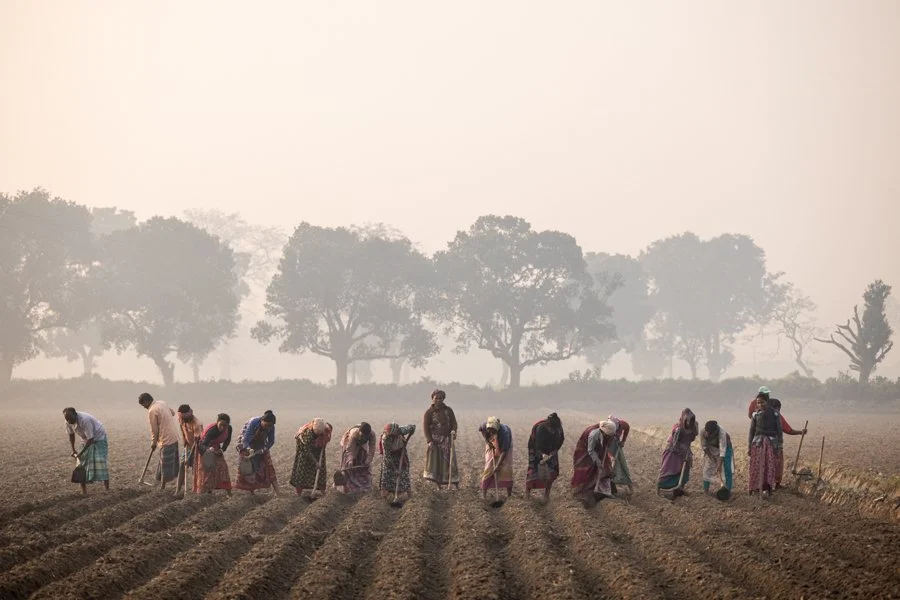
This morning started early, as we had to catch a flight to Sylhet, on the opposite side of the country. As usual, leaving early paid off. On the way to the airport, we stopped to photograph misty fields, and once again Bangladesh delivered far beyond expectations.
We arrived just as a large group of men and women were beginning work in the potato fields. Perfect alignment, soft fog, calm gestures, and strong graphic repetition. It turned into one of those rare moments where everything clicks instantly, and nobody wants to stop shooting. Easily one of the most beautiful early-morning sessions of the entire photography tour.
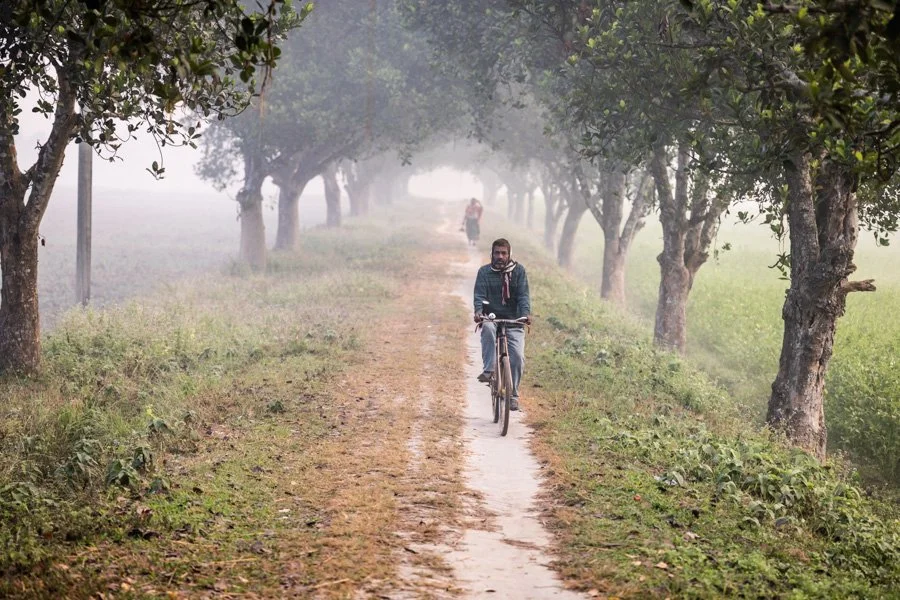
The magic ended at the airport, where an overzealous security employee confiscated the only bottle of gin I had carefully carried so far. A tragic but inevitable sacrifice.
After a slightly delayed flight, we arrived in Sylhet and headed to the riverside. The atmosphere immediately felt different — slower, more open, and less intense than Dhaka. Workers were washing after a long day, the river reflected warm sunset tones, and the mood was calm and contemplative.
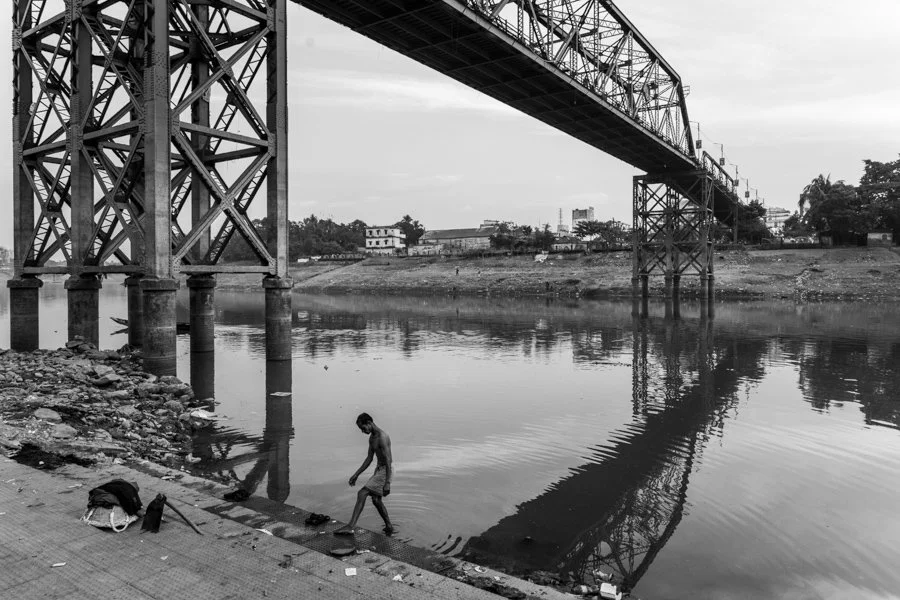
We checked into the hotel and ended the day with an excellent Indian dinner. Chicken Vorta is as good as life!
Day 9 — Mist, Rivers, and Slow Observations
This was our earliest start of the tour. We drove toward a quiet riverside village before sunrise, aiming to capture fishermen heading out to work in the mist. We arrived while everything was still calm, and slowly, activity began to build.
Fishermen pushed their boats into the water, duck farmers moved their flocks, cows crossed the river, and locals gathered along the shore. Nothing was rushed. We stayed still, observed, and photographed as layers of life unfolded in front of us.
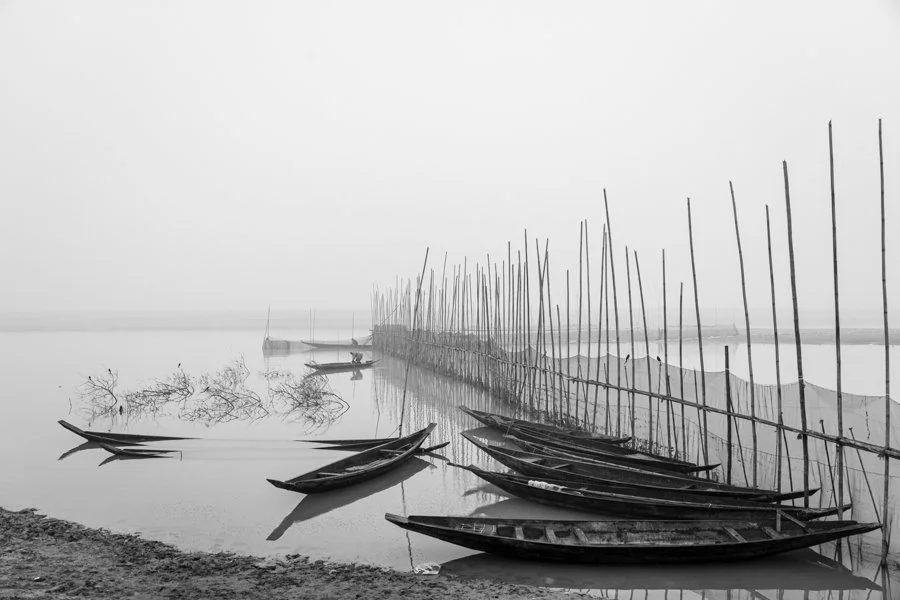
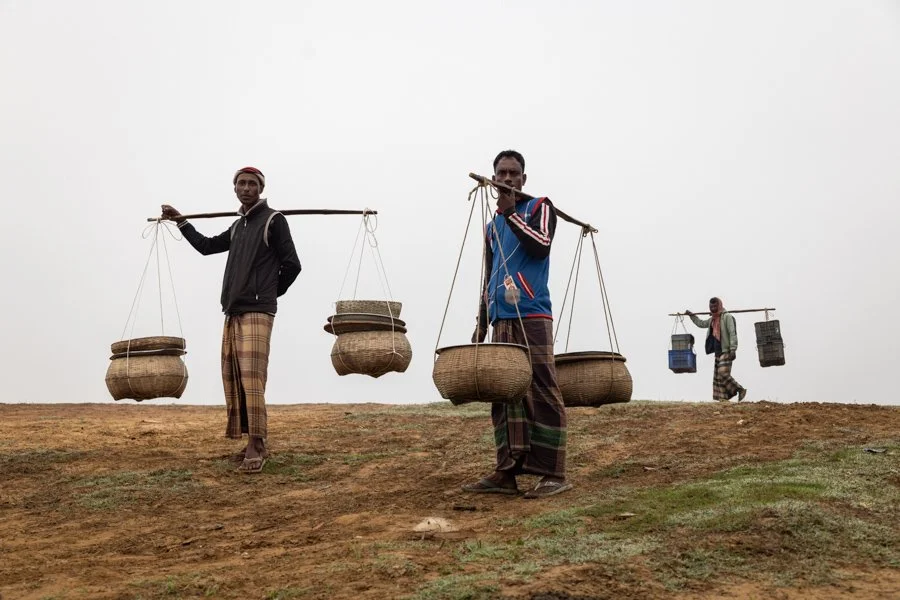
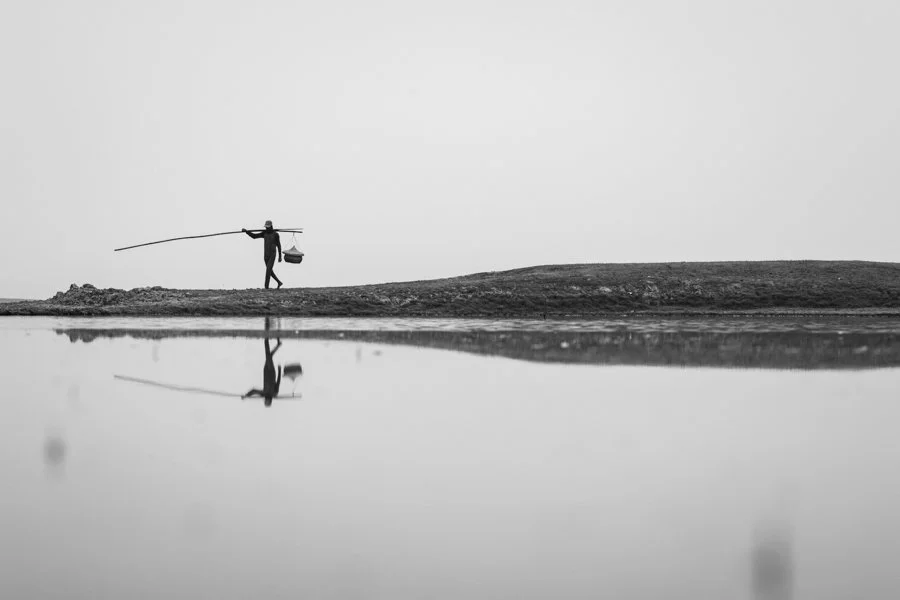
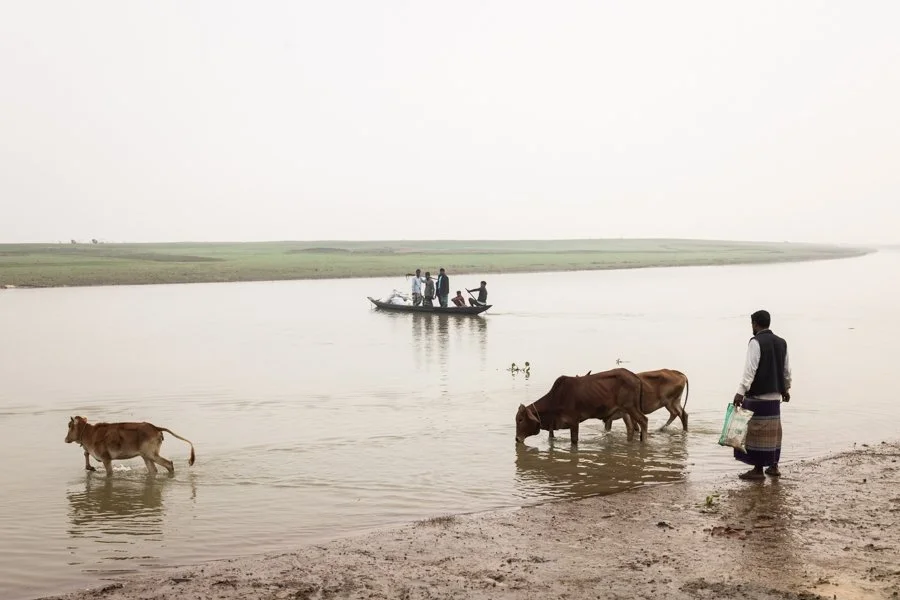
Breakfast was improvised and simple, eaten locally, before we continued toward Sreemongal. On the way, we stopped at brick factories, always visually powerful places filled with dust, movement, and still a soft diffused light.
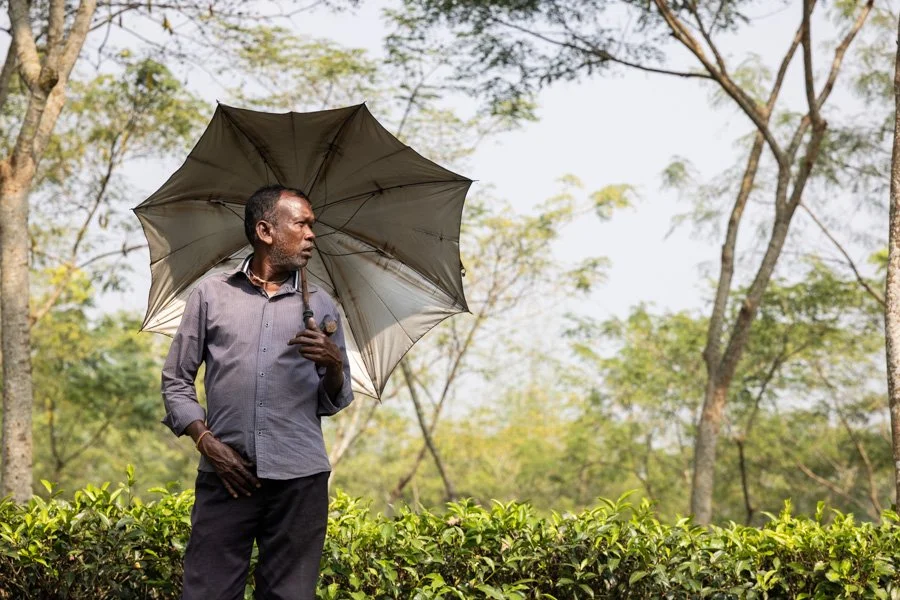
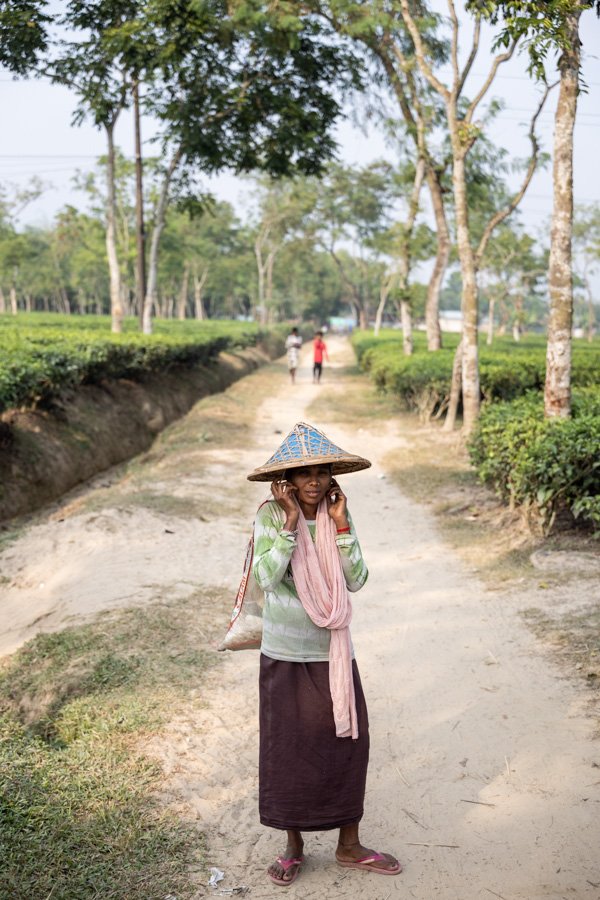
Arriving in Sreemongal, we visited a large estate with a local guide who helped us communicate with the workers. This made all the difference. Conversations flowed easily, and we were welcomed warmly.
The afternoon was spent walking among the fields, photographing workers during their breaks, focusing on portraits and gestures. A long but very balanced day, mixing calm observation with strong visual storytelling.
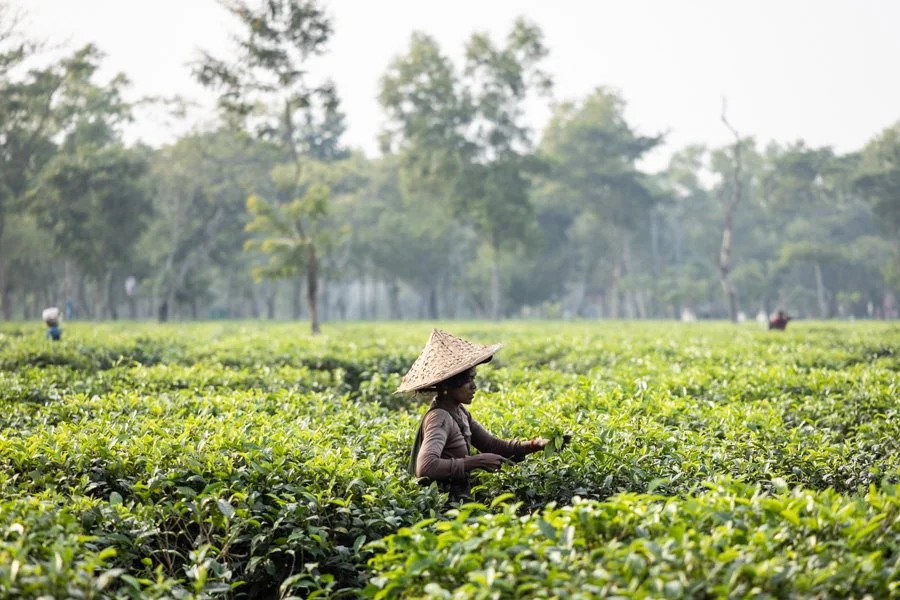
Day 10 — Markets and Hard Work
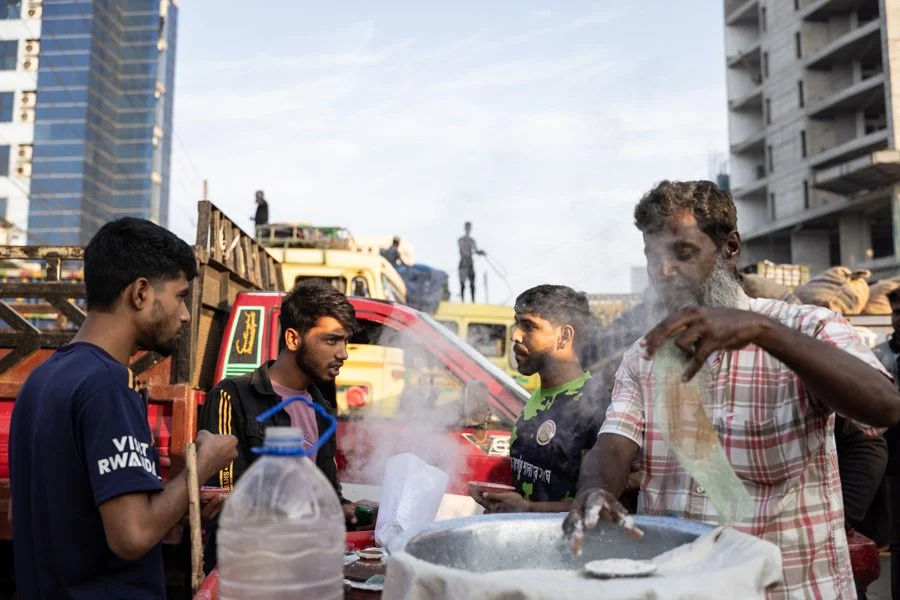
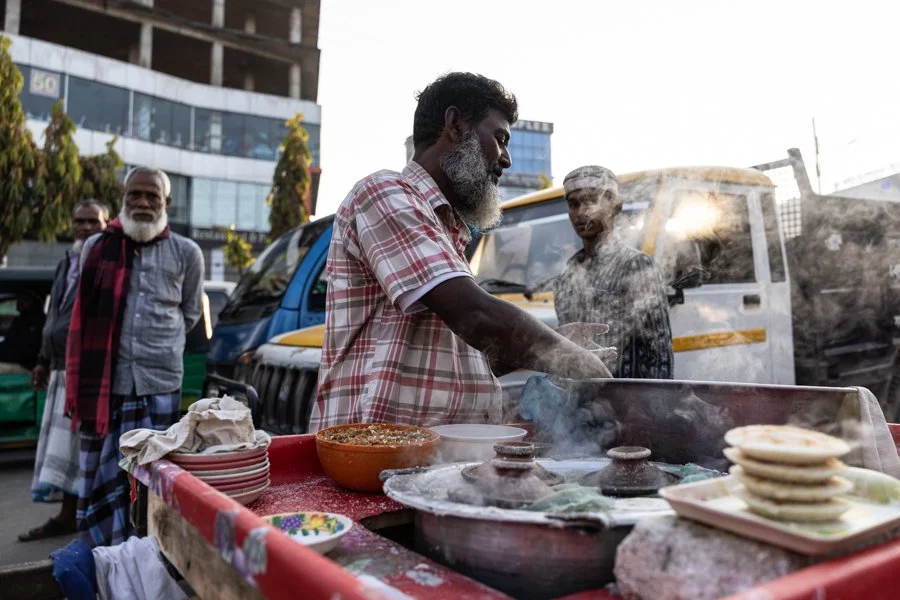
The morning began at one of my favourite markets in Bangladesh, a place I have photographed many times and even written about separately. It was busier than ever, with more trucks, more people, and more chaos.
Some buildings had changed, and a few familiar light patterns were gone, but the energy was still intense. We worked hard to find structure within the confusion, isolating moments and using movement to our advantage.
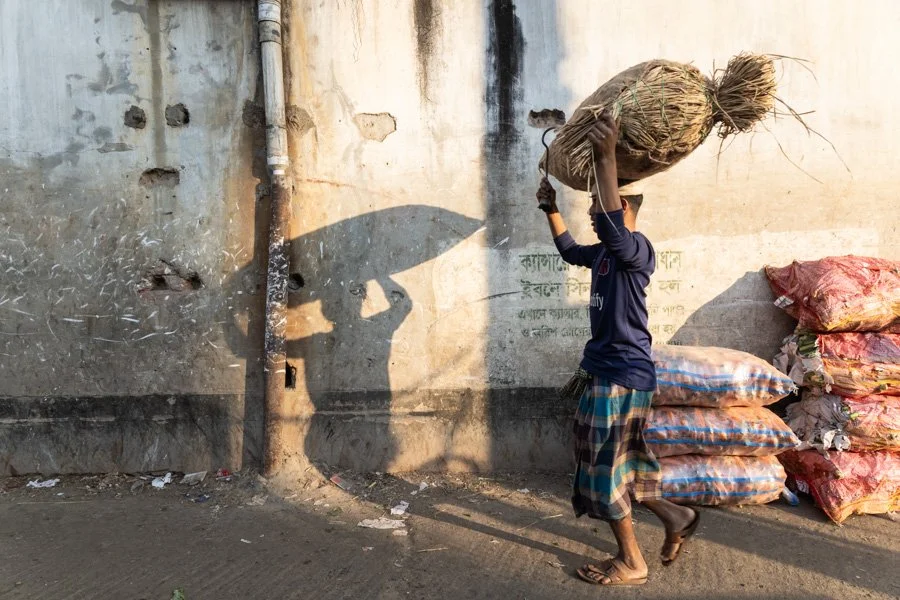
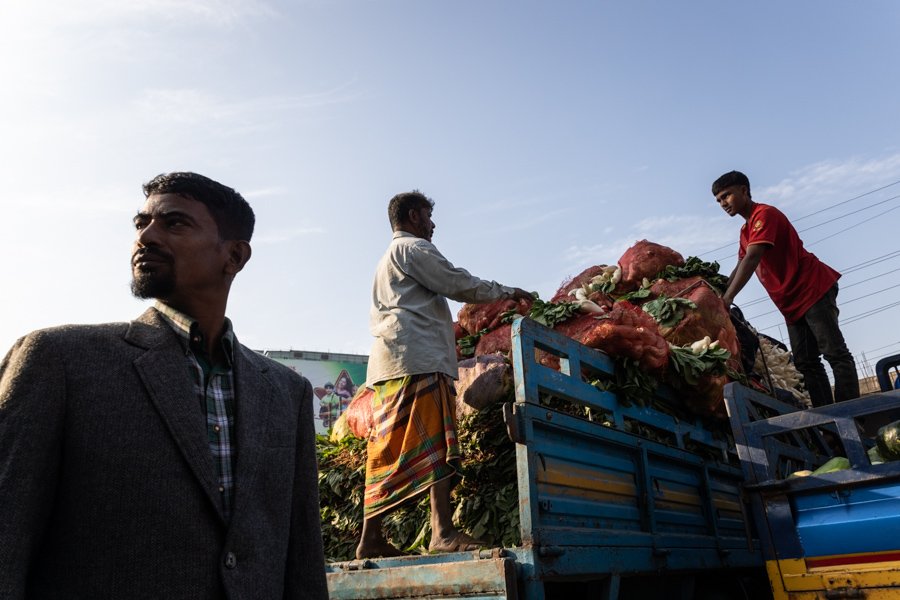
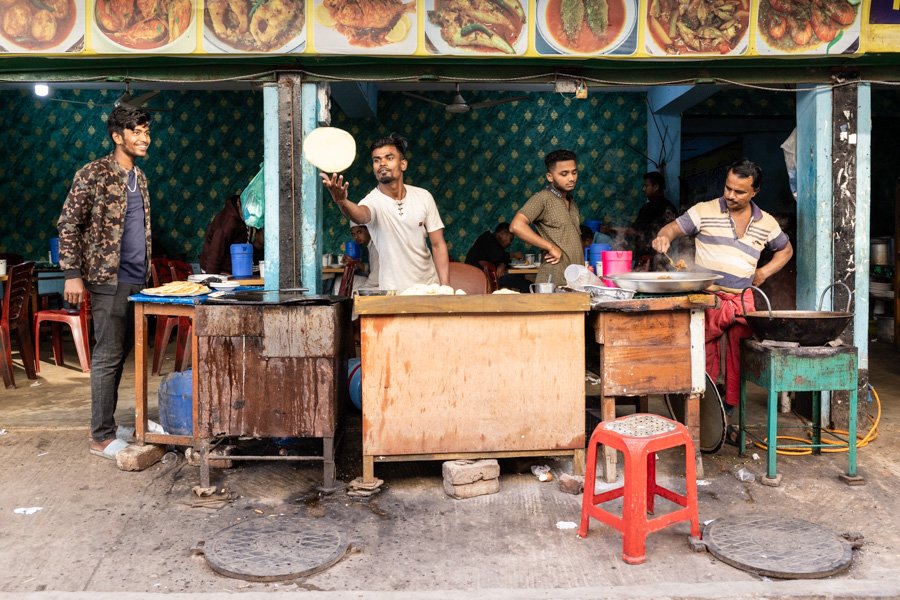
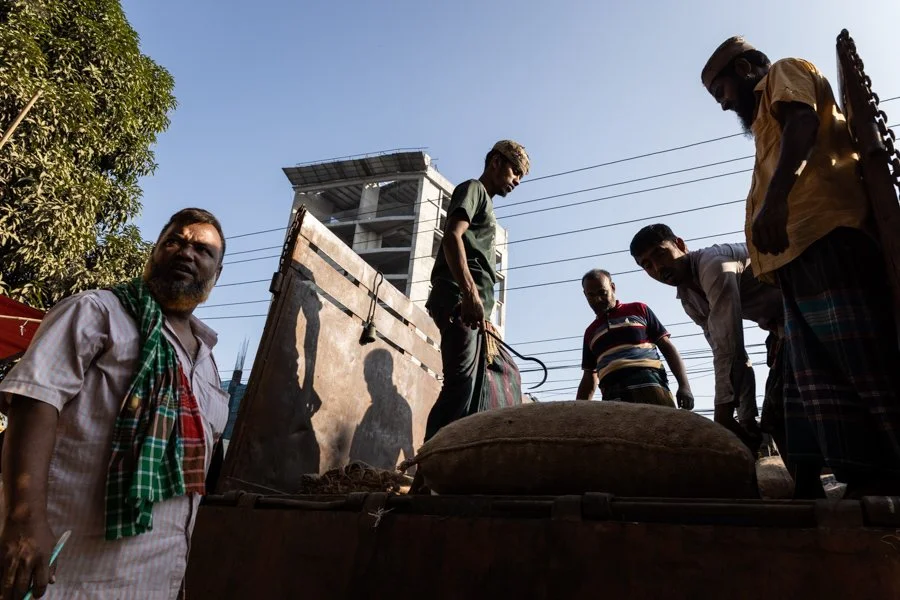
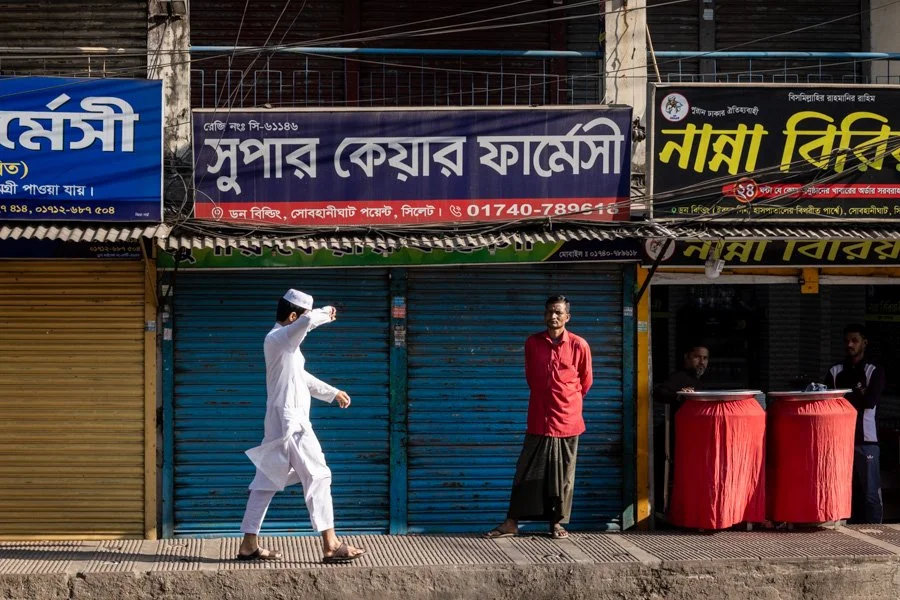
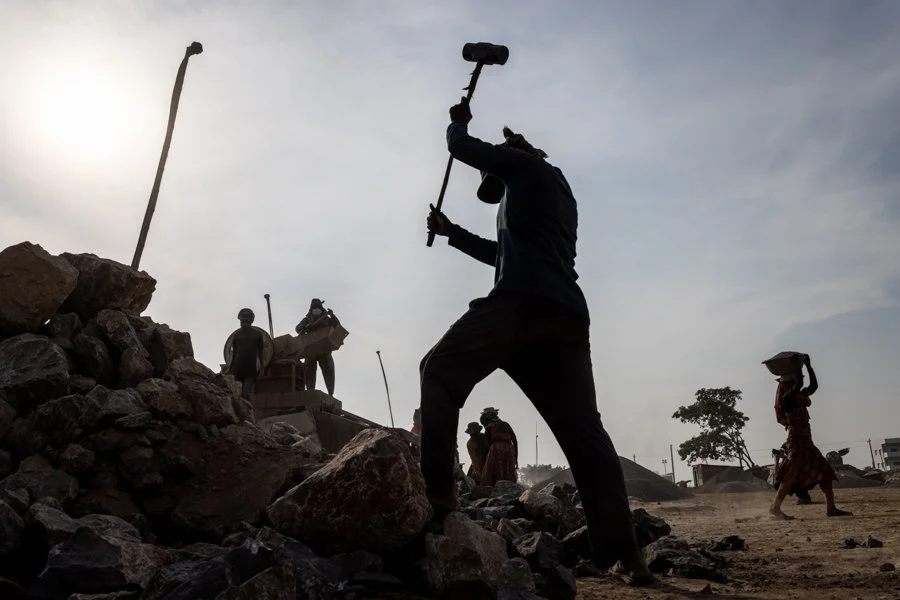
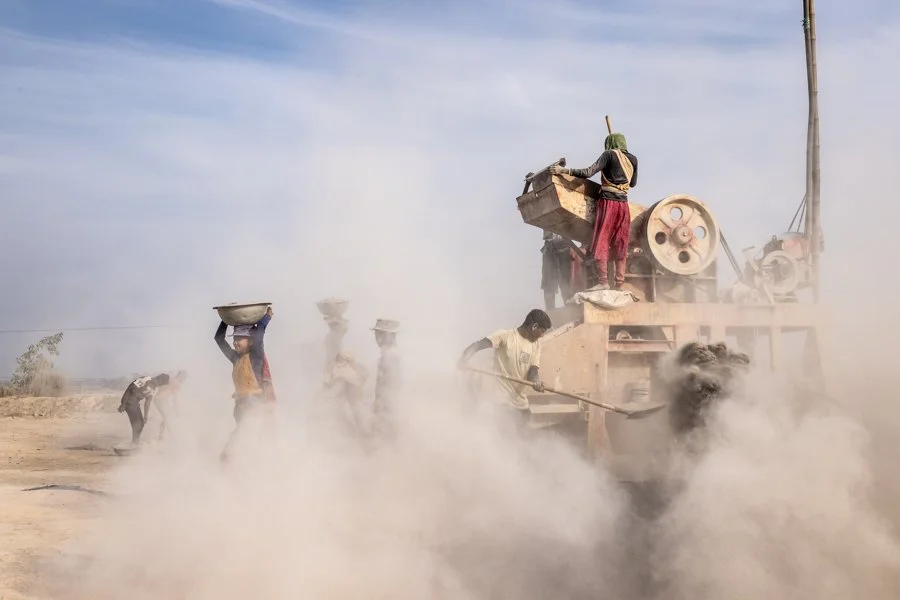
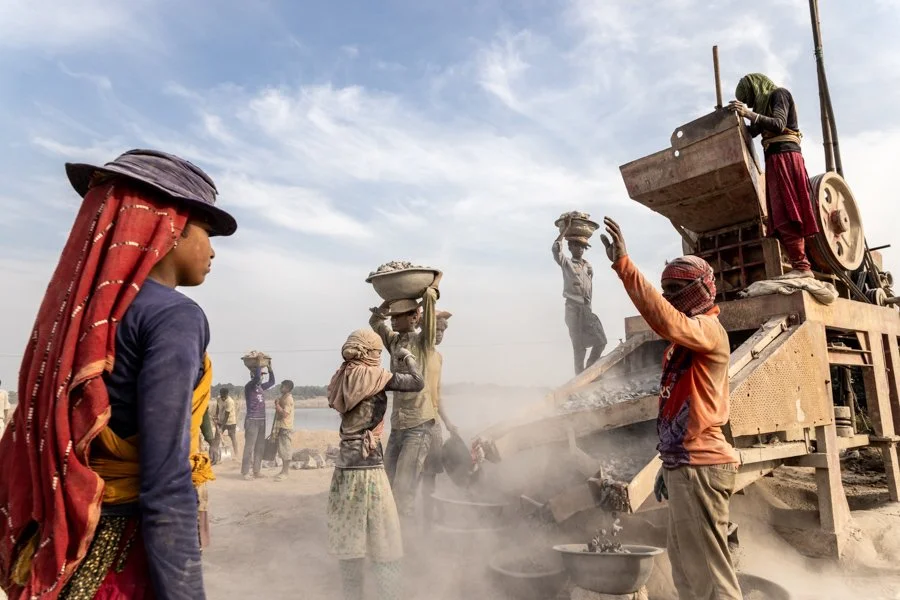
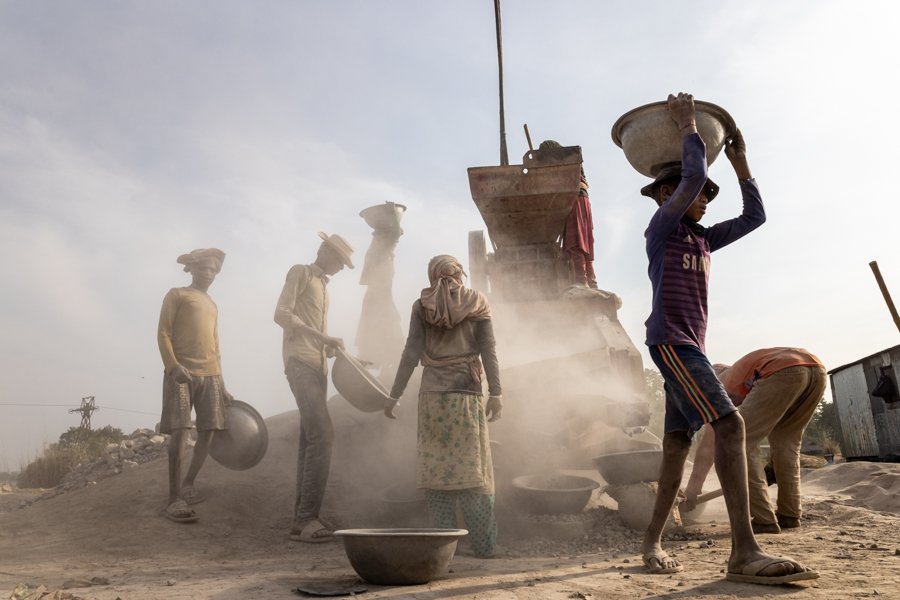
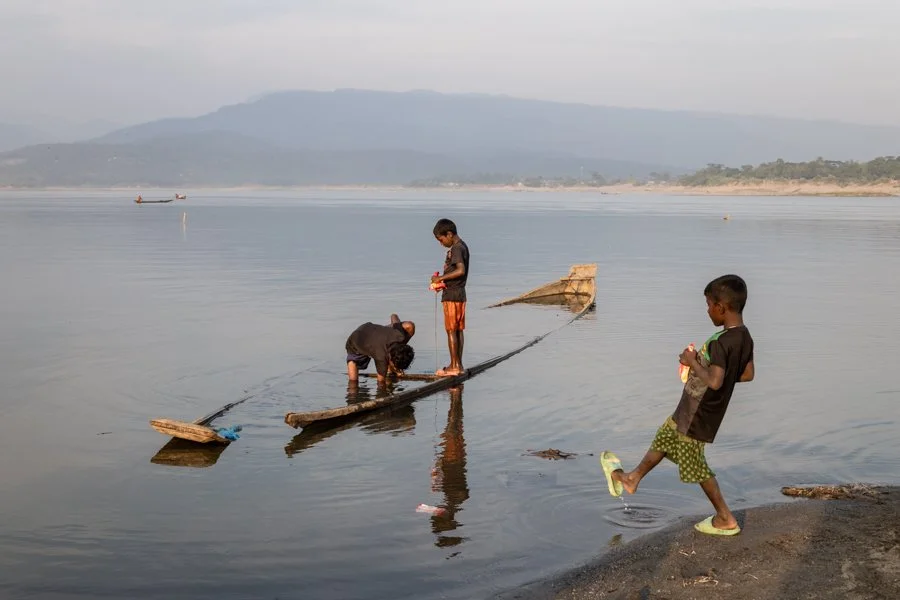
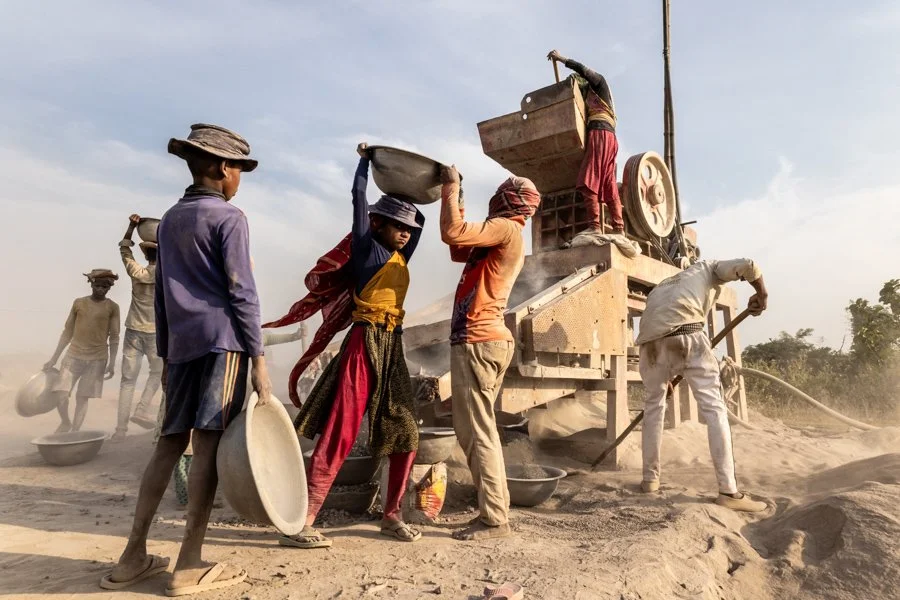
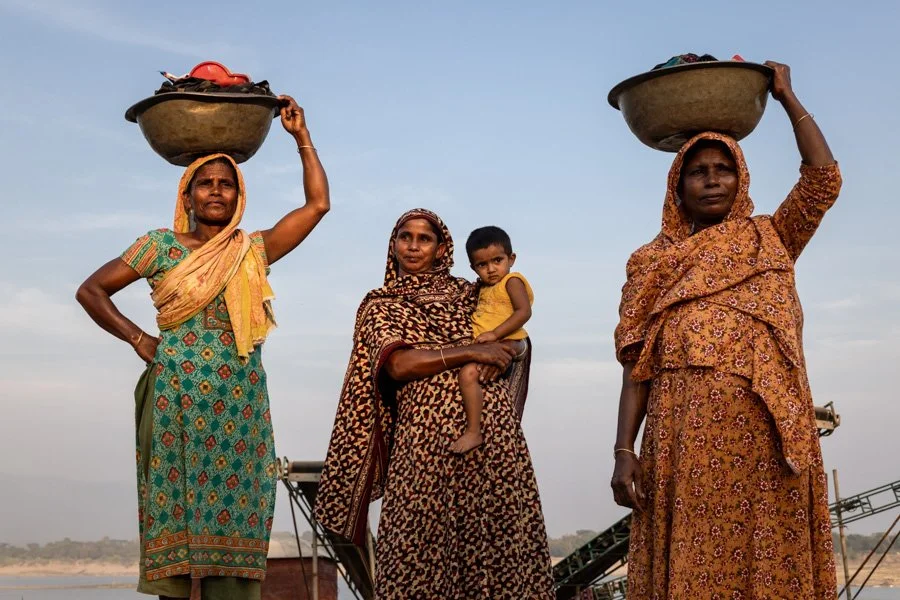
Later in the day, we drove toward the Indian border to photograph the rock-breaking area along the river. It is always striking to see how physically demanding the work is, yet how visually powerful the scenes remain. Dust filled the air, colours exploded under the light, and repetitive movements created strong compositions.
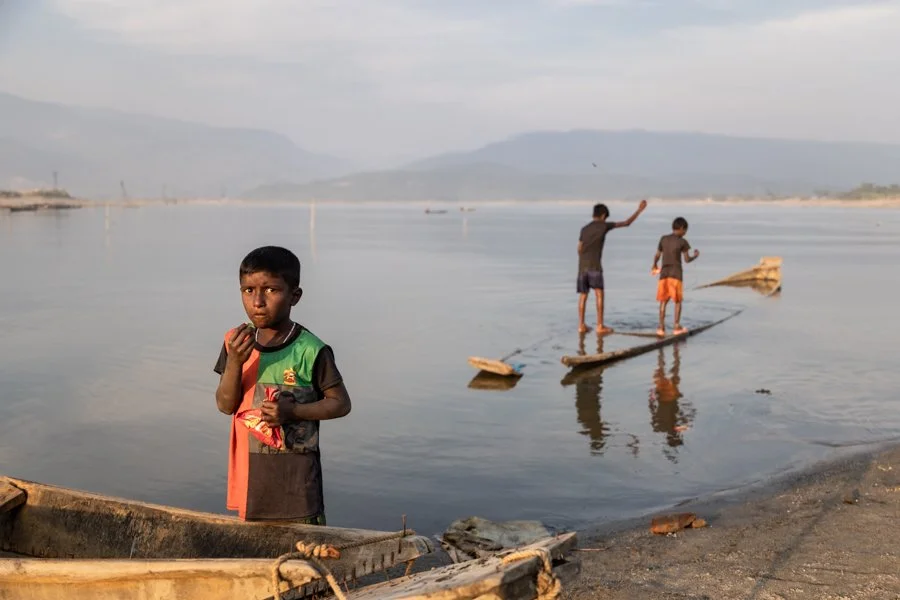
We ended the afternoon walking through nearby villages, quickly followed by groups of children who proudly became our guides. By the river, fishermen repaired boats while kids played nearby. It was one of those afternoons where time disappeared, and cameras never rested.
Day 11 — Controlled Chaos
We started early in the narrow alleyways of Sylhet, where workers were unloading rice, flour, and goods into warehouses along the river. The streets were already alive, filled with movement and noise.
We walked slowly, letting scenes develop rather than forcing them. Small stalls, animated conversations, gestures, and expressions offered endless opportunities for candid photography. By this point in the tour, everyone was comfortable working quickly and instinctively.
We then reached the fish market — absolute chaos. Crowded, noisy, slippery, and intense. Photographing there is never easy, but that’s exactly why it’s rewarding. We found pockets of relative calm, explored side areas, and even an ice factory, which added an unexpected visual layer.
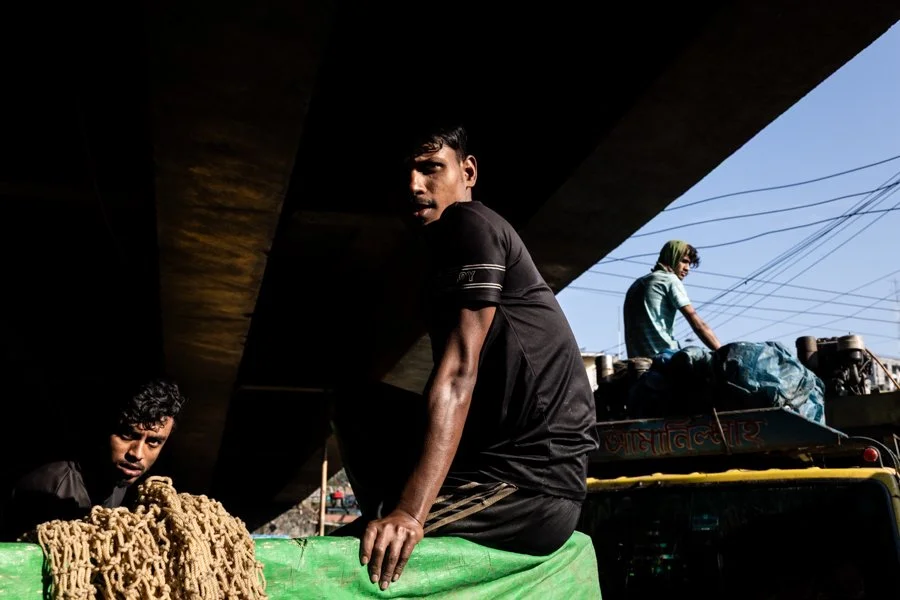
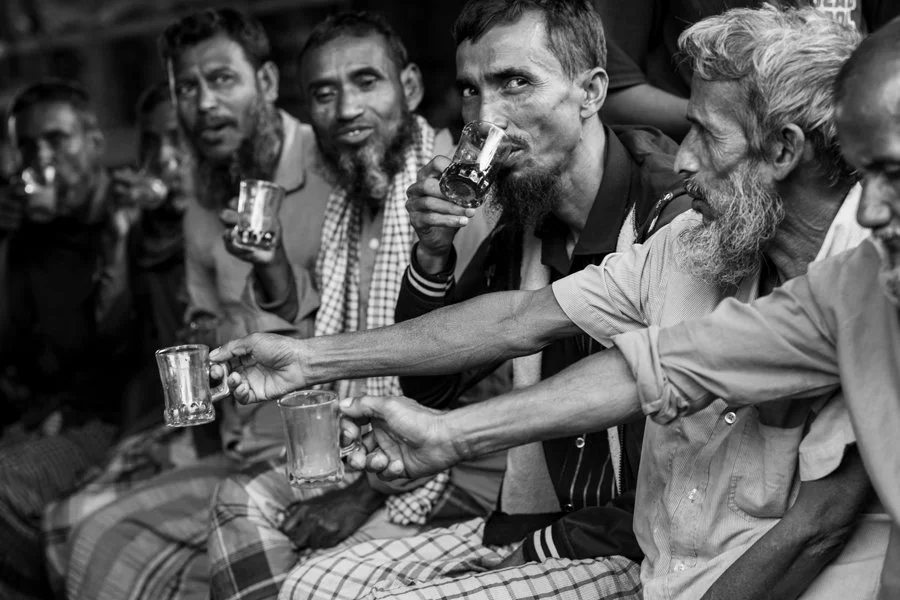
After a long morning, we returned to the hotel for breakfast and rest, before heading to the airport for the final flight back to Dhaka. Tired, dusty, and satisfied.
Day 12 — Final Goodbyes
The last day is always quiet. No cameras, no schedules, just airport transfers and goodbyes.
After spending nearly two weeks travelling together, photographing daily life, sharing meals, and navigating Bangladesh’s beautiful chaos, parting always feels strange. Everyone leaves with full memory cards, tired legs, and a much deeper understanding of the country and its people.
And just like that, another photography tour in Bangladesh came to an end.
Join the 2026 edition of my Bangladesh photography tour. Information available following this link.