
A Travel Photographer's Response to the 6 Rules of "Ethical" Photography
I originally wrote this article back in 2016, but the ideas in it still hold up, so I'm republishing it here with a few updates.
Last week, while I was travelling with my group in Bangladesh, my friend Thierry sent me a link to an article by Amanda Machado, about the ethics of taking photos when travelling in developing countries. I read it before heading out for the day and didn't think much of it at first. But it kept nagging at me, and by the end of the day I knew I needed to write a response.
This isn't a personal reply to the author — it's meant to counterbalance the ideas in the piece. I'm answering as a professional photographer, but I'd guess most hobbyists and enthusiasts with real experience travelling in developing countries would land somewhere similar.
The original article was structured around six questions. I'll go through each one, quoting the author's original question before giving my take.
1. "Are my intentions for this photograph only about myself? Would you still travel to that country if you could not take a camera with you?"
Would I still travel without a camera? No — and I don't think that's a strange answer. I'm a travel photographer; travelling with a camera is more or less the definition of what I do. I travel because I photograph, and I photograph to encourage other people to travel too. Even as a hobbyist, you'll often choose a destination partly because you know it's photogenic — that's not a flaw, it's just honest.
Are my intentions only about myself? What else would they be? People don't travel to make the locals happy — they travel for themselves: to broaden their horizons, meet people, experience new cultures and food, and open their minds to something different. Even travelling with an NGO to help with a social issue still carries some personal fulfilment. That's not a contradiction, it's just how motivation works.
2. "Does this photo represent a stereotype of people from this country?"
A tourist visiting the usual tourist spots will usually come home with the images everyone expects — the ones we've all seen before. A photographer, hobbyist or professional, tends to look for something different. If you feel the same way, you're not chasing postcards you've seen a hundred times (refer to my library of fake photos in Asia if you want to find out what they are), you're chasing light and beauty wherever you find them. If that happens to be a woman in a conical hat in a green rice field in Vietnam, so be it.
Of course, it depends on what the photographer is actually looking for. Some people are happy with the classic postcard shot, unoriginal as it is, and some keep pushing for a more unique view. For me, the real question is about authenticity: stereotypes form at a certain point in time, and things inevitably change after that point. Countries, people and cultures are constantly evolving — often faster in developing countries than anywhere else. So how exactly do you define a stereotype today, and how are you supposed to "avoid" photographing it?
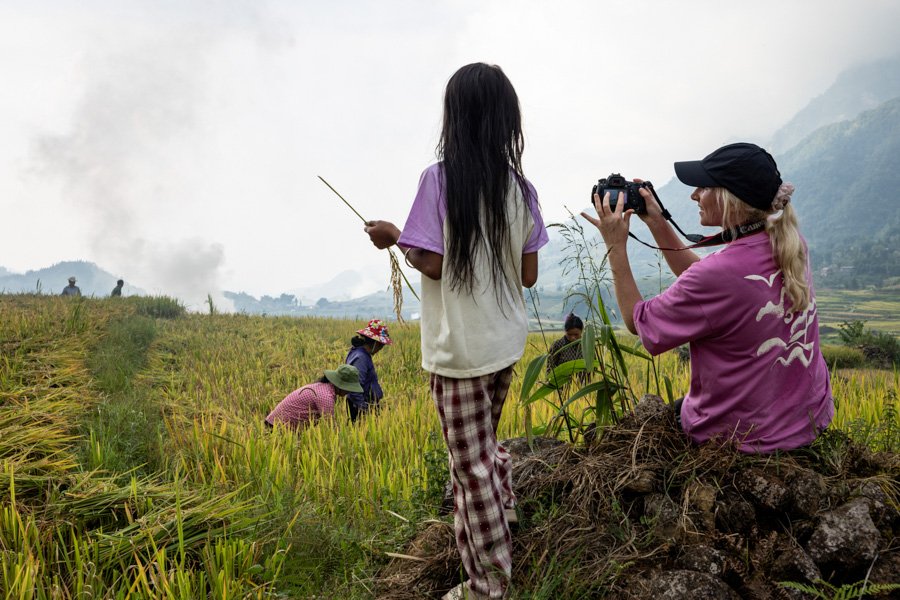
3. "If a tourist in my home country took a photo of me in this same situation, would it make me feel uncomfortable?"
Do you mean photographing an American man hand-picking tea leaves on a mountain plantation? I'll be honest — this is the point in the original article I find hardest to agree with. It leans heavily on a Western frame of reference, without accounting for how differently privacy and personal space are understood across cultures.
In much of Asia, for instance, the concept of privacy simply isn't the same as it is in the West. You can't assume people elsewhere feel the same way about a camera pointed at them that you would.
So let's flip the question: if people in Bangladesh are constantly stopping you in the street to ask you to photograph them — and I mean constantly — would you feel uncomfortable if people in France didn't do the same? Of course not, because the culture is different. Privacy and personal space mean different things in different places, and as a traveller, that's worth understanding rather than exporting your own norms wholesale.
4. "Does the photo represent people with dignity?"
If you're a traveller or travel photographer, you're generally not chasing images of people at their most vulnerable — that's closer to the work of a photojournalist. You're looking for light, composition, a unique quality to the moment. You're telling a story, and not every story you come across while travelling in a developing country will be a flattering one.
John Free puts it well in one of his videos (genuinely worth watching if you struggle with personal space while shooting in Western countries): "you don't photograph the fat lady."
I'd hope anyone who travels brings a basic level of judgment and respect for the places and people they visit. You don't photograph naked children and post them online. You don't go looking exclusively for people living in misery. This is common sense, and travelling or photographing without it will get you into trouble fast.
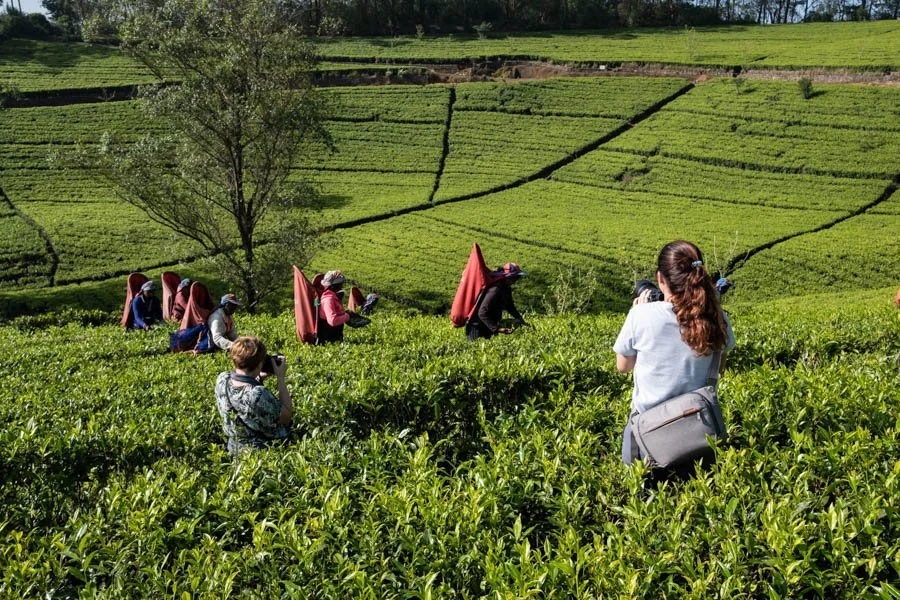
5. "Have I tried building a relationship with the person I am photographing?"
This is a genuinely good point. As I've mentioned elsewhere when talking about approaching people for portraits, building some kind of relationship first gives you, the photographer, a better read on your subject and more understanding of their surroundings. It also shows real respect, and it tends to make everything easier — and I'd hope it leads to a better photo too. My rule of thumb when travelling: treat people as though you'll be coming back to visit them again tomorrow, so they're genuinely happy to see you.
That said, it isn't always possible.
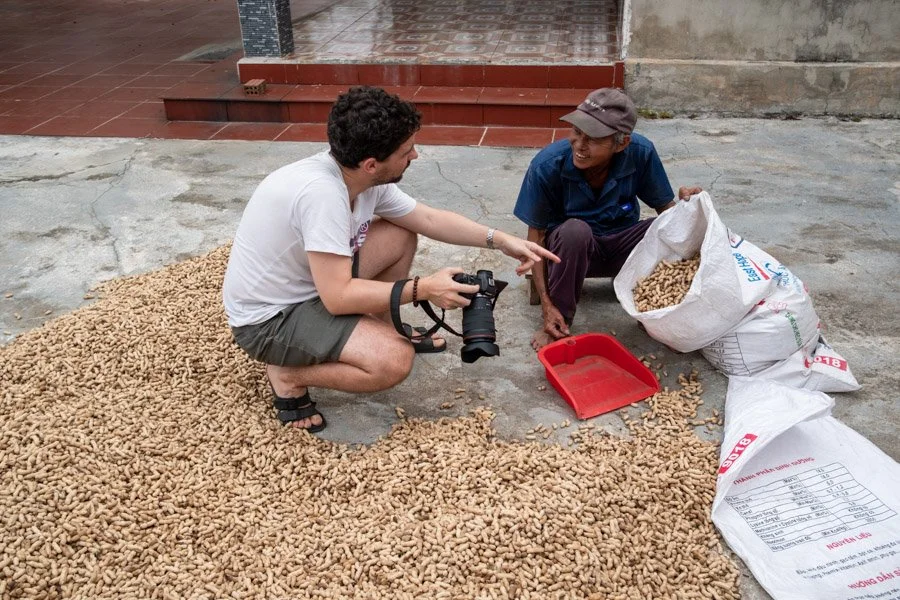
6. "Have you asked permission?"
This is where candid photography would essentially stop existing. Street photography, candid travel photography, even candid wedding photography — all of it depends on not asking permission for every frame.
"Excuse me, ma'am, I see you're carrying twenty kilos of bricks on your head — do you have a minute? I'd love to photograph you, purely to build my portfolio and maybe pick up a few extra likes on Facebook."
Here's what tends to happen once you ask permission: your subject poses in the most predictable way possible, or throws up a peace sign. Which is, ironically, its own kind of stereotype — hardly the recipe for an original image.
As I've said already, building a real interaction is important, both out of respect for the person you're photographing and to better understand the moment and your composition. But for me, that interaction most often happens after the photo is taken — showing my subject the image, telling them how great it looks, sharing a laugh. That's often the best part of being a travel photographer: the contact and connection that comes from understanding how people live and what they expect, culturally, from an interaction like this.
So no, I don't think getting close to someone and photographing them without asking first is inherently disrespectful. You're a travel photographer — you have judgment, you're doing your best not to disrespect the people around you, and you're paying attention to the culture you're in and what it does or doesn't call for.
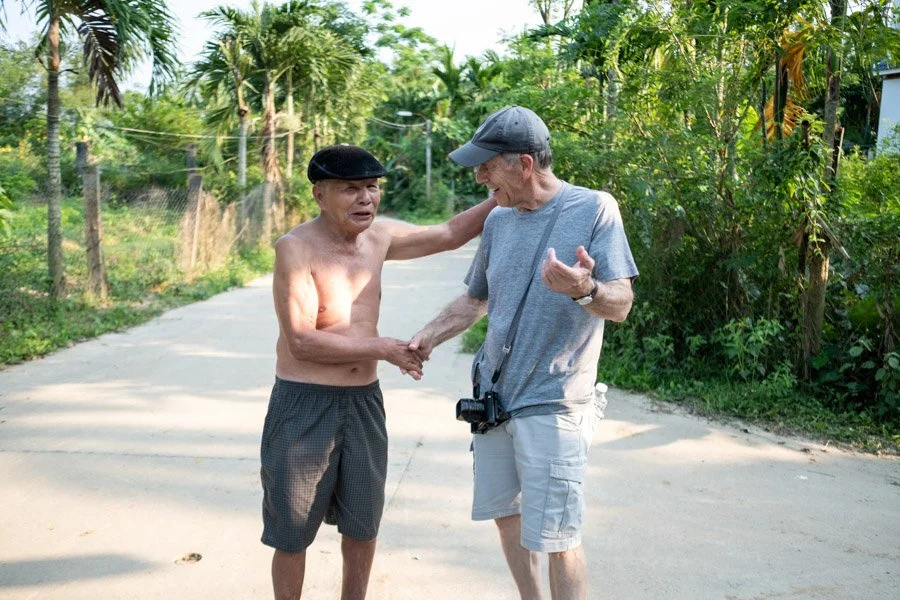
Big thanks to Jeanne Wood and Kevern Meredith, both hobbyist travel photographers, for talking through these ideas with me in a very boring airport lounge. And another big thanks to Regis Binard for taking this photo of me having breakfast and chatting with a red Dzao lady during our latest North Vietnam photo tour.