
"So… how do you get so close to people?"
This is probably the most common question I hear during my photography tours in Asia. It's the busy season in Hoi An right now, I run tours almost every day, and I feel like I answer this question on repeat — so I figured I'd finally put it in writing. I already wrote a tutorial years ago about approaching people for photos, but it was long overdue for an update (like most of my articles, let's be honest).
How do I get close to people to take their photos? Good question — because taking photos of people while travelling is about a lot more than technical skills.
Approaching people for photography, especially across Asia, takes empathy, some cultural understanding, and the ability to build trust fast. Whether you're new to people photography in Asia or just want to feel more confident in how you engage with your subjects, this one's for you.
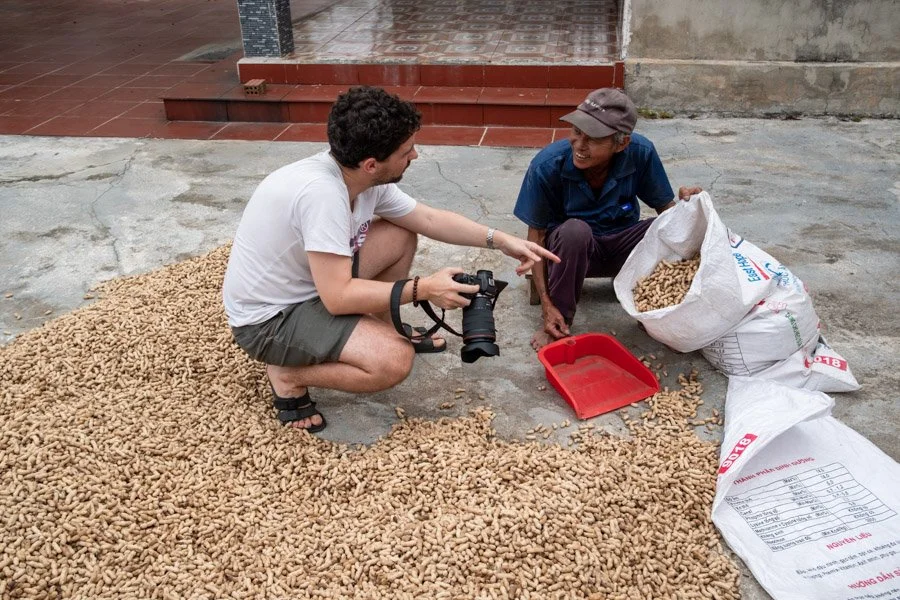
Why People Photography in Asia Is So Unique and Rewarding
Asia gives you some of the most vibrant, diverse environments for street and portrait photography out there. Life happens outside — in the streets, on doorsteps, in markets, in rice fields. In Vietnam, people are out from 5 or 6am, right when the light is best! Perfect timing if you want nice photos, because — you know this already — it's all about the light.
But what really makes it special is the human connection. Done with respect and awareness, people photography in Asia lets you tell intimate stories and document daily life in a way that actually means something. I genuinely believe it's a smarter, better way to travel. You meet people, you learn about the culture around you, and you end up with experiences you'll actually remember.
And it makes your photography better too!

Why Getting Close to Your Subject Is Good for Your Photography
There are plenty of good reasons for this, and I talked about it in another article (also very overdue for an update, I know, I know). But to summarise, getting close to your subject helps you:
Control your surroundings. Getting close lets you control the light and the background just by moving a little to one side or the other. I watch people shooting portraits with telephoto lenses all the time, and they end up "victims" of whatever background happens to be sitting behind their subject, with almost no control over it.
Observe the details. You'll also see more of your subject — their clothes, a piece of jewellery, an interesting facial expression you'd have missed from further away.
Experience the culture. And you'll almost certainly have a better travel experience, because you're actually in contact with the people who live where you're visiting. And honestly, what better way is there to understand a place than connecting with the people in it? After all, it is called Travel Photography, and I think we should place the “Travel” before the “photography”. If not, we may end up standing amongst a group of photographers travelling to a location to get their trophy shots to win competitions, on a photography tour where every scene is set up with models and everyone takes the same images.

How to Approach Your Subject to Take Their Photo
First, let's look at what I believe you should NOT do when photographing strangers while travelling.
Step 1: Make eye contact Step 2: Smile Step 3: Mimic holding a camera and raise your eyebrows
We have ChatGPT to thank for that wonderful suggestion. I agree with steps 1 and 2. Step 3 is pretty much one of the worst things you can do if you actually want a good photo of a stranger on the street.
What you'll end up with, doing it this way, is someone awkwardly staring at your lens with either a shy half-smile or a huge forced one, throwing up the peace sign, and just waiting for you to take the shot. That's the best-case scenario. Worst case, they wave you off to go photograph your mother instead.
This is why I never ask my subjects if I can take their photo. I mean that literally — I do not say the words "can I take your photo?" — because I know that question kills any chance of a good candid moment. And you know me, I like my photography candid.
The trick isn't to ask. It's to be permitted. I know, I know — how does that even work?
I want to photograph someone only if it feels right. I need to know my subject is okay with me being there, with a camera, pointed roughly in their direction. That's better for my conscience, obviously, but it's also better for the quality of my images, which we'll get to.
Do not ask people if you can take their picture!
I want their permission; I just don't want to ask for it directly, because — like I said — that breaks the natural moment. And asking someone "can I take your picture?" puts a surprising amount of pressure on them, out of nowhere.
To me, "Can I take your picture?" basically translates to "Hey, I'm taking a photo of you right now, are you ready?" Imagine the pressure that puts on your subject. And on you too! Suddenly it's "oh no, I have to take the photo now, and it has to be good, and everyone's looking at me, I have to perform!"
Step 1: Forget "Taking" the Shot — Focus on Creating a Human Connection
Now, I know, there are situations where taking the photo first is the only way to actually catch the moment. In those cases, it's still worth creating a connection with your subject right after — explain why you took the photo. And I don't mean launching into your whole artistic philosophy on travel photography. Just something simple: you're travelling, you liked what you saw, so you took a picture. Tell them where you're from, what you love about their country. Tell them that in your country, people do things differently so you find what they do interesting. People understand this. Show them the photo, get a smile out of them, and you'll feel good about the whole exchange. You'll also make life easier for the next photographer who comes along after you. So be nice :)
How many times has this happened to us on a tour: we walk up to a scene thinking we know the shot we want, and then by sticking around, chatting, working the scene a bit longer, we walk away with a completely different set of images — ones we never would have thought of on our own. Just by letting the scene unfold. And this is why I love candid photography!
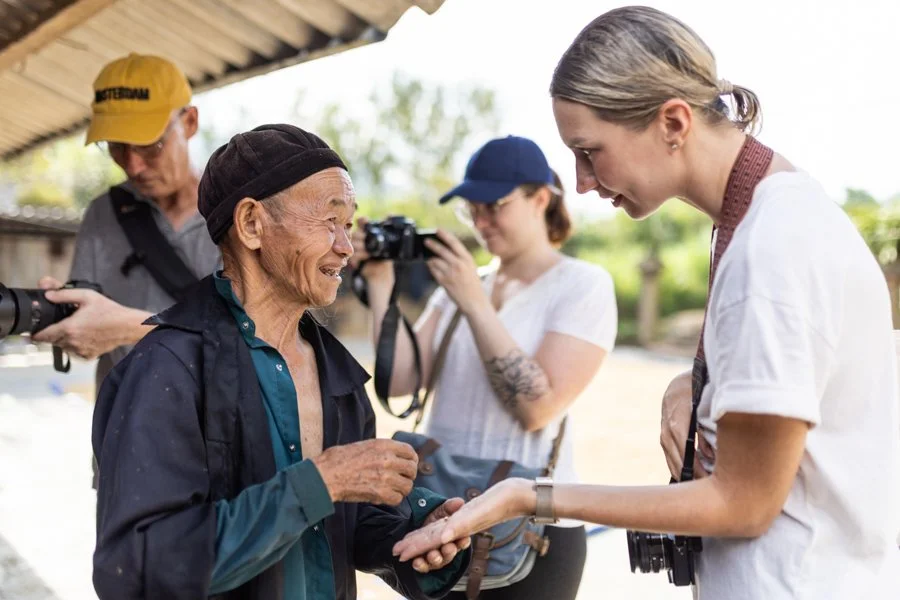
Step 2: Show Interest in Your Subject
Basically, explain why you're taking their picture.
Is it because you think they're beautiful? You like their clothes, their jewellery? The thing they're doing, or selling? Or maybe you just feel like saying hello and chatting with someone in the street, and the camera follows naturally from there?
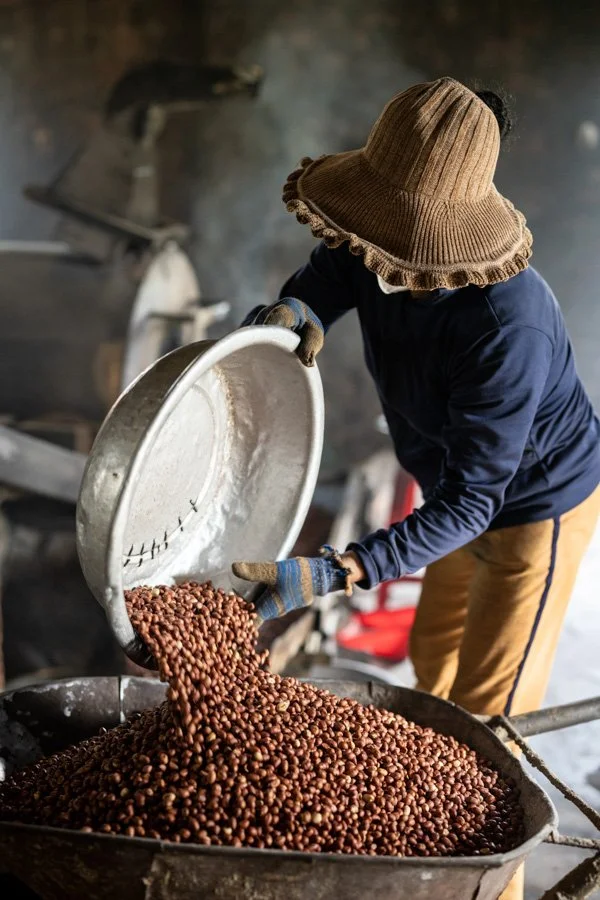
People will usually let you hang around for a while if you genuinely show interest. It happens to us constantly on tours: by showing interest in one small scene, people end up taking us to see other parts of what they're doing. True story — last year I stumbled on a little "peanut factory" outside of Hoi An. A few women there roast, sort and pack peanuts. We wandered in without really knowing what was going on, and started showing interest in an old lady sitting on the floor sorting peanuts.
A minute later, she pointed inside the house and told us to go have a look. We walked in and found two women actually roasting the peanuts — incredible light, smoke everywhere, the kind of scene I'm obsessed with (it took me right back to the coffee factories in Vietnam's central highlands).
Once you show real interest in what's happening around you, and in the people themselves, a lot of doors start opening for your photography. You give yourself time for opportunities to come to you, instead of just trying to grab a shot and move on.
Even better: Let your subject be interested in you
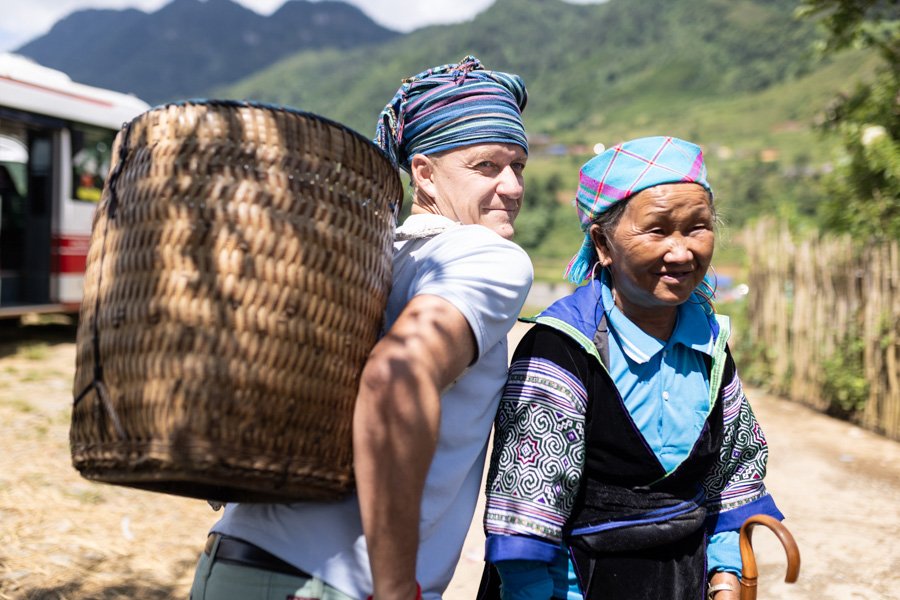
I would reverse this point and say, “let your subject show interest in you”. People are generally quite curious, mostly in locations where they do not often meet foreigners. I have tons of people come to me and touch my hairy arms. I let them touch it and I tell them (if I am able to communicate with them) that I am a monkey. This makes everyone laugh and makes me seem like an approachable and friendly person. This makes it much easier then to photograph the people. Nowadays, everyone is taking selfies. And when travelling to less popular locations in Asia, people very often want to take selfies with us. I enjoy this opportunity to break the ice with them. I instantly come next to them and pose for their selfies, acting silly and smiling a lot. I don’t even have to break the ice with the people I want to photograph: they do it themselves because they want a selfie with me. How easy it has become?
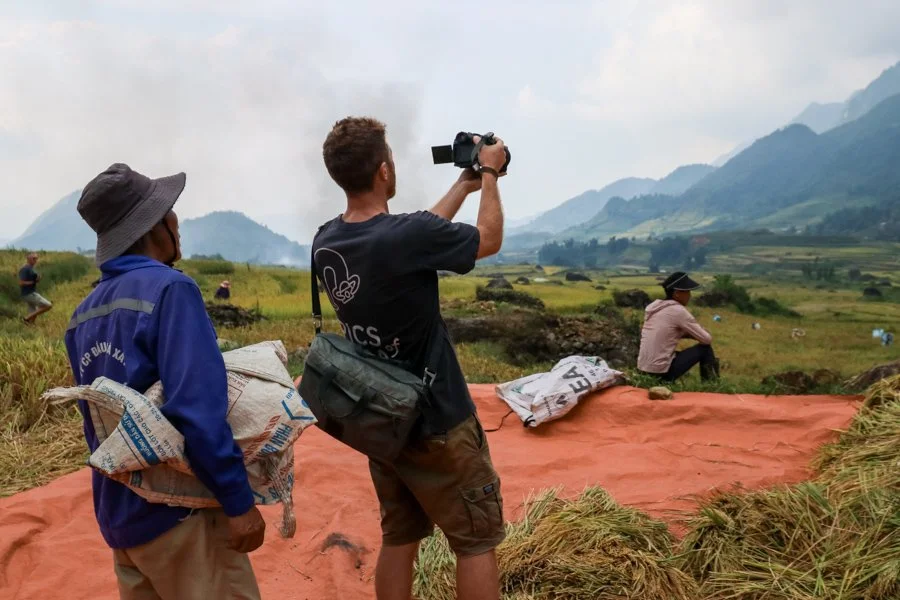
Step 3: Sign Language, Lots of Smiles, and Positive Energy
I always tell people on my tours to learn at least three words of the local language: hello, thank you, and beautiful. These three words will take you a very long way.
While showing interest in what someone's doing, use your hands, point at things, mimic actions (pretend to put something in your mouth if you want to ask whether what they're holding is food, for instance), and smile. A lot. You genuinely don't need a shared language for any of this.
I've also noticed that showing up with a big smile and bombarding people with questions about whatever fascinating thing they're doing fills them with a kind of positive energy — it becomes hard for them to not want to spend a bit of time with you. People can tell when you're genuinely curious about their life, and that changes the whole kind of access you get to your subject.
As many people can be quite shy when foreigners come close to them, I find that if I start acting silly around them, it melts the ice very quickly. My colleague Regis is particularly good at this, using everything he can to make a show of himself in front of all the locals and make everyone laugh. I don’t think you can find a better way to break the ice with shy people around you!
Step 4: Shoot While You Interact, Interact While You Shoot
One more reason a smaller mirrorless camera helps your people photography: it's much easier to keep eye contact with your subject when there's no camera wedged between your face and theirs.
Raising a viewfinder to your eye builds a wall that can break the natural interaction you had going. Your subject will often start posing the moment they realise a photo is actually being taken — because people are polite, they want their guest to be happy, so they'll pose. With a cheesy smile, every single time.
It’s often the case that some people come behind me to take a look at my screen and see what I am shooting. I am then actually letting them look at it, moving closer to them so they can see clearly. And I tell them how beautiful or interesting the scene is. The people then often talk to the people I am taking photos of, telling them how cool they look, and it creates laughs and smiles amongst everyone.

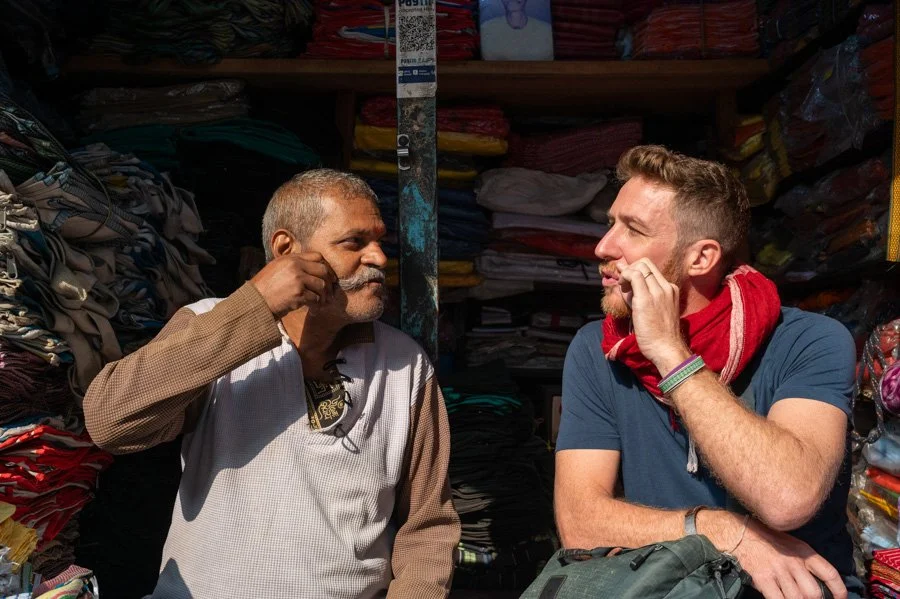
This goes very well with the part 2 of this article: showing interest in your subjects. What I often do is that I first interact with my subjects. I chat with them (if I can) or point, I show interest, I make people smile, laugh and feel relaxed. Then I wait for the action to begin again, for example in a market, I wait for a customer to come and buy something from my subject. This is when the real candid moments happen again, and I try to capture these moments. But my subject is already aware that I am here, that I am friendly, and that I take photos (because I have a camera in my hands). This allows me to take the time to really capture the moment, withough feeling that my subject is uncomfortable being photographed.

Step 5: Take Better Photos
While I'm showing interest and interacting with my subject, I actually have time to study my surroundings properly. I can adjust the background or shift the light simply by moving a step left or right. Being close means I'm in control of my frame, and I can keep scanning for elements that make the story better.
Take a few minutes to just watch, before you even touch your camera. Let locals see you, feel your presence, understand you're not just another passing tourist with a lens.
Step 6: Let Your Subject Be the Maker of Your Decisive Moment
One of the biggest mindset shifts for better travel photography is this:
👉 Don't "take" photos — create them, with people.
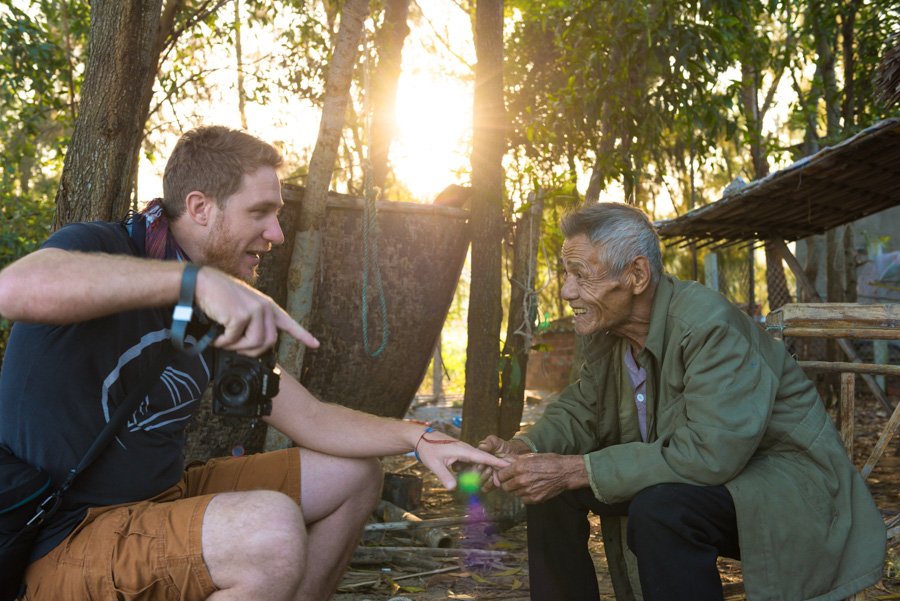
What I mean is, I often have no idea what photo I'm going to end up with when I first meet someone. I'm responsible for the framing, the overall composition — but I rely on my subject to hand me the actual moment. And I get much better results, far more interesting images, by interacting with them first. It lets me understand them better, stick around longer, and ultimately walk away with something stronger.
That one shift changes everything.
Approach someone with mutual respect and genuine curiosity — instead of trying to grab a quick shot and run — and you'll instantly improve both the experience and the photo. You'll have more time to study your surroundings, fix a messy background, all of it.
One mistake I see constantly from people on my tours: the second they spot a subject, cameras go straight up to their eye, or their face buries into the monitor, hunting for a composition. By doing this, you completely kill the interaction — you're too busy staring at your camera, hoping a good composition magically appears on its own.
More Tips
A Mirrorless Camera Makes It Easier
Shooting with a DSLR makes all of this a lot harder, because you're putting a big bulky camera between you and your subject, which blocks or kills the interaction before it starts. This is exactly why I love shooting travel photography with my mirrorless Fuji (hey, speaking of which — it's broken again!!!!).
What to Do If People Ask for Money for Photos
A lot of photographers ask me: should I give money when photographing people in Asia?
Short answer: not always.
Sometimes you should, and it's the right call. Sometimes you shouldn't, and that's the right call too. This is a genuine grey area, and everyone seems to have a different opinion on it.
But here's the thing — if someone's asking you for money, it usually means you didn't approach them the way you should have in the first place.
Or it could mean you're shooting in the wrong spot — somewhere so overrun with tourists that people have started seeing you as a walking wallet rather than a person. In places like that, genuine interaction gets a lot harder, because all anyone wants is to sell you something.
My Process, Summarised
Here's basically my process when photographing people:
First, I very rarely shoot alone. 99% of the time I'm taking travel photos, I'm actually running a photo tour — so I've got someone, or a small group, with me. And honestly, that makes the approach easier, because we can point at the same thing together and talk about it out loud. People understand we're genuinely interested in whatever that thing is, because they can hear us talking about it. Makes sense?
So I come in close, often with some physical contact — a handshake, for men — and I ask about them and what they're doing. While that's happening, I'm already studying the background. I'm thinking about what's distracting, what actually adds to the story, whether for colour or for narrative reasons.
Once I know exactly which angle I want, all I need is a small step sideways, because I'm already close. That's enough to reshape the background completely.
While I'm interacting, I tilt my camera screen so I can frame without raising it to my eye — usually somewhere around chest or belly height. I keep chatting while I do this, and I try to anticipate what my subject's about to do. Often, while they're talking about what they do, they'll glance over at the thing itself. Ask someone how many cows they have, and they'll look at their cows before answering. That works about 80% of the time for me here in Asia, at least.
I also shoot with continuous autofocus and eye detection most of the time, so the camera handles focus on my subject's face without me thinking about it. And since I shoot in Aperture Priority with Auto ISO, the only setting I'm really managing is aperture — and I've usually already set that while walking toward my subject.
And then, it's all there. I'm mid-conversation, my framing's ready, my settings are ready. All that's left is pressing the shutter. But even then, like I said earlier, I wait for the actual moment. I don't know exactly what it'll be, but something has to happen — not just a person staring blankly at the lens. I want action, emotion, a bit of a twist, something that makes the image worth looking at twice.
And that's it! That's how I do it, and it works very well for me here in Asia.
Want to Practice This in Real Life?
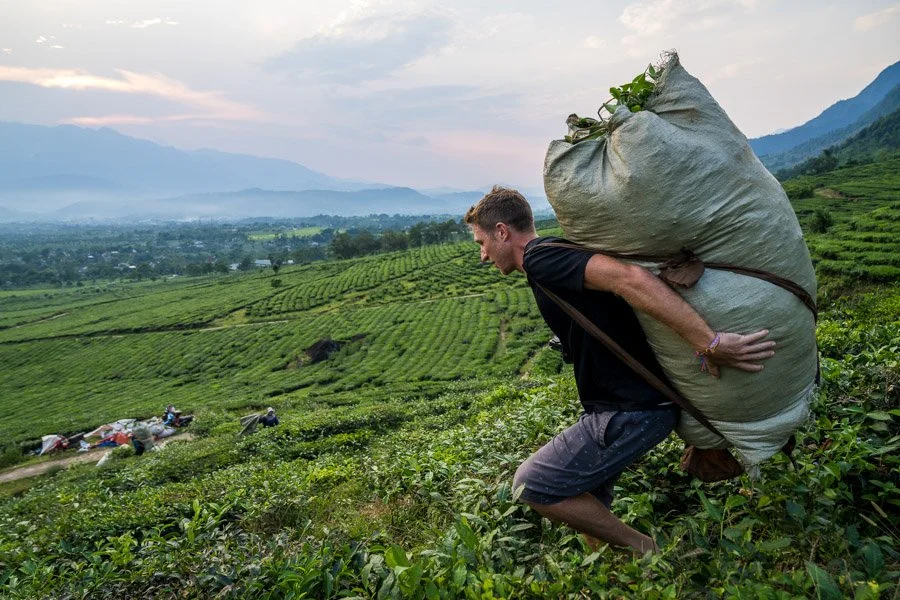
Come join us on a people photography tour in Asia, where we'll guide you through immersive, respectful photography in villages, markets, and all the hidden corners in between. You'll learn how to connect through your camera, capture genuinely authentic portraits, and — most importantly — build the confidence to approach people anywhere in the world.